REMEMBERING CHIKANORI MOJI ON AUGUST 16: 18th YEAR DEATH ANNIVERSARY OF THE FORMER ADJUTANT OF IMPERIAL JAPANESE NAVY’s 1st AIR FLEET – 門司親徳の命日:2008年8月16日
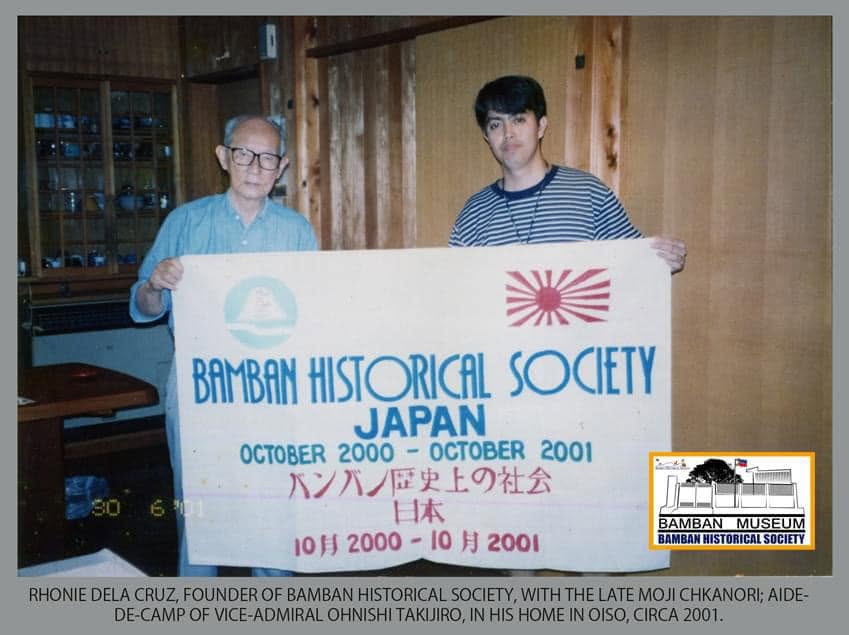
I was in Yokohama, Japan in 2000 to 2001 on a job internship at Shin-Ei Sangyong. At the same time, I was also there to conduct my research for my Japanese Study of WWII in Bamban-Clark area during my spare time. In the course of activities, I was able to find a former officers in the Japanese Navy who was stationed at the Bamban Naval Headquarters tunnel in late 1944, even former pilots who served with the Air Group 201; the unit famous for the Japanese Navy Special Attack Squadrons. Fifty-six years later, I was able to meet a former naval officer from 1st Air Fleet and the aide of Vice-Admiral Onishi Takijiro, in his home in Oisho, Japan in furtherance of my study in WWII. While stationed at Yokohama, I find time to have a visit to his home, conduct interview, and have conversation about WWII in the Philippines, mostly at Bamban and Clark. The tunnels of Asahiyama in Bamban became their home since they moved out of Nichols Field on November 19, 1944. In that tunnel headquarters of the Japanese Navy 1st Combined Air Fleet, Moji-san, then as a young lieutenant commander, was the secretary of Vice-Admiral Ohnishi, he was quartered along with the officers and staff of the 1st and 2nd Air Fleet commanded by Vice-Admirals Ohnishi and Fukutome.
Courtesy of Naoki Koudachi
JAPAN’S SURRENDER & VICE-ADMIRAL OHNISHI 大東亜戦争における日本の降伏と大西滝次郎中将
The days preceding this date are important dates in the history of WWII. After the two atomic bombs were dropped on Hiroshima and Nagasaki on August 6 and August 9 respectively, Japan’s unconditional surrender became imminent. On August 14, 1945, The Allies announced the surrender of Japan. The following day, the 15th, was considered as the official Victory-Day (while the official US commemoration will be on September 2, 1945). August 15 is a sacred day for the Japanese as “Memorial Day for the end of war or the day of mourning of the war dead and praying for peace”; the Obon! In Japan, the period August 13-16 is also special religious even especially for the Buddhists wherein families honor the spirit of their ancestors; known as Obon Festival, ending on the 16th. The same date, however, the founder of the official Kamikaze special attack; Vice-Admiral Ohnishi Takijiro committed ritual suicide or seppuku to atone the death of the Kamikaze pilots.
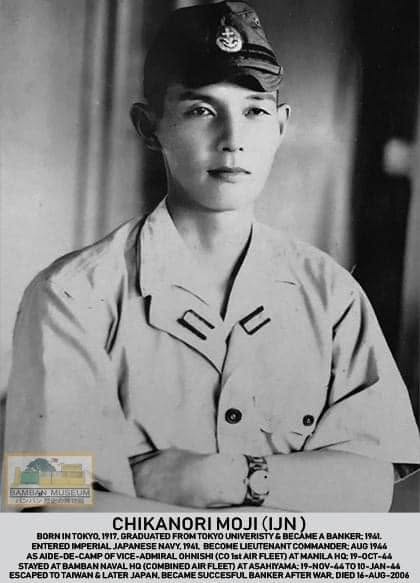
LIEUTENANT COMMANDER MOJI AT THE BAMBAN NAVAL HEADQUARTERS LATE 1944 バンバン海軍本部トンネルでの門司親則、1944年
In Japanese Study of WWII in the Philippines, or particularly in my region of Bamban-Clark area, Vice-Admiral Ohnishi played an important role as Japan’s leading naval flag officer and in aviation; being the commander of the 1st Air Fleet charged for the navy’s air defense of the Philippines and also on his sojourn to Mabalacat where the first special attack force was organized on the night of October 19, 1944. On his assignment to the Philippines starting October 20, 1944, he was always accompanied by his adjutant (also his secretary), Lieutenant Commander Moji Chikanori until their departure for Taiwan on January 10, 1945, after carrying out the tasks of air operations including that of the special attack, the defense planning and preparations on the mountains of Bamban for the land battle. Mr. Moji was able to survive the war and became a banker, holding executive positions in banking and financial securities institutions (president of Maru Securities). He published several books detailing his war experience in the Philippines, including Ohnishi’s 1st Air Fleet headquarters sojourn at Bamban Naval Headquarters located in a tunnel:
Moji Chikanori’s published books:
At the Far End Between the Sky and the Sea – Reminiscences of the First Air Fleet Adjutant;
For the Spirits of the Dead Soldiers – A Visit to Philippine Islands.
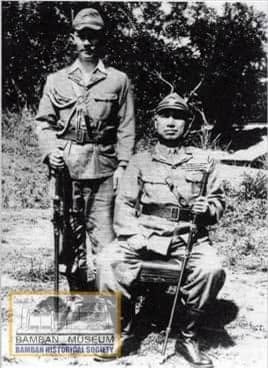
after the transfer of 1st Air Fleet from Bamban Naval
Headquarters tunnel on January 10, 1945.
Courtesy of the late Moji Chikanori
He was also very active in conducting several trips to the Philippines, Clark and Bamban area where his delegation visited the former battlefields and prayed for the souls of those who died.
CENTER FOR WWII JAPANESE STUDY 日本大東亜戦争研究バンバンセンター
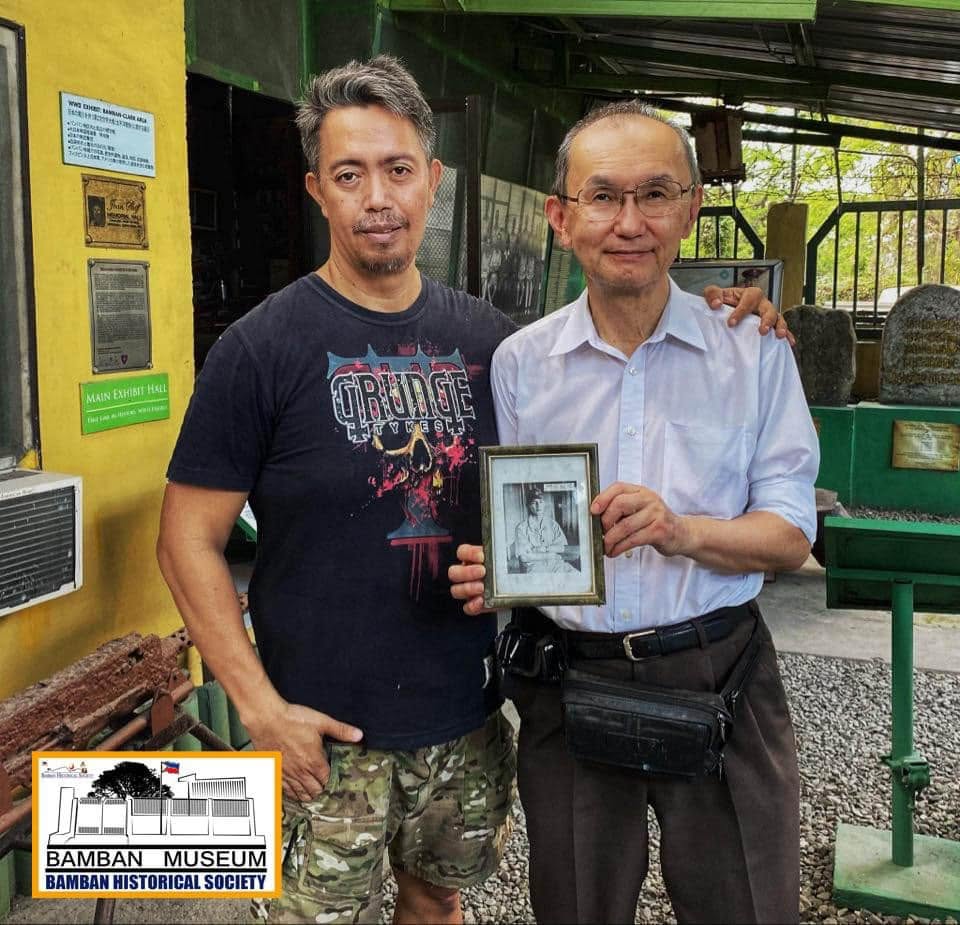
I came across Moji-san when I was in Japan in 2000 during my work internship and also conducting my research on the Japanese Study on weekends. After buying some of his books, I able to get in touch with him with the help of the book publishers in order to get interviews. Lucky enough, I was able to meet him several times in his home in Oisho, Japan; about 8 times during the duration of my stay in the country. In those visits, I came to know him, his kindness and humility. He gave me many materials including his books, manuscripts and maps of Clark-Bamban. A friendship was developed out of those research activities in the house of Moji-san. At present, I established the BAMBAN CENTER FOR JAPANESE STUDIES at Bamban Museum to accumulate collections of materials, references and related literature on the history of Japanese in WWII in Bamban-Clark area, work on the translation of the collections and materials to English and publish research journals and books and to make available to Filipino students, researchers and historians. In cooperation with the Zero Fighter Association of Japan, the aim for the collection and works for this Center will be achieved with the ultimate goal of setting the collection at the Museum Library.
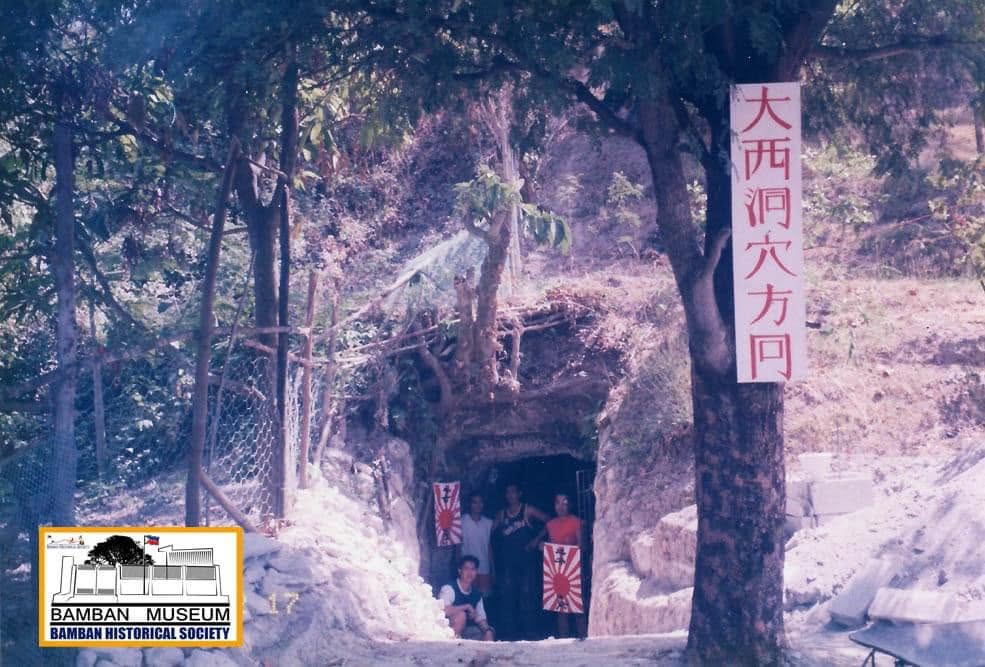
Rhonie Dela Cruz Photo
AUGUST 16: MOJI’S DEATH ANNIVERSARY 8月16日 門司親則命日
After coming back from Japan in October 2001, I became more active in my Bamban Historical Society’s activities. By 2005, I was able to establish the Bamban Museum, so busy that I forgot to communicate with Moji-san. However, my brother Romel was able to visit him in 2007 during his early years in Japan. In 2008, I came to know the news that Moji-san, then age 91. Actually, he died on the same date of his superior, Ohnishi Takijiro; on August 16, 2008. Today is Moji-san’s
12th year death anniversary. All his donated materials, his books and maps are now in display at Bamban Museum for the Japanese Study of WWII in Bamban area.
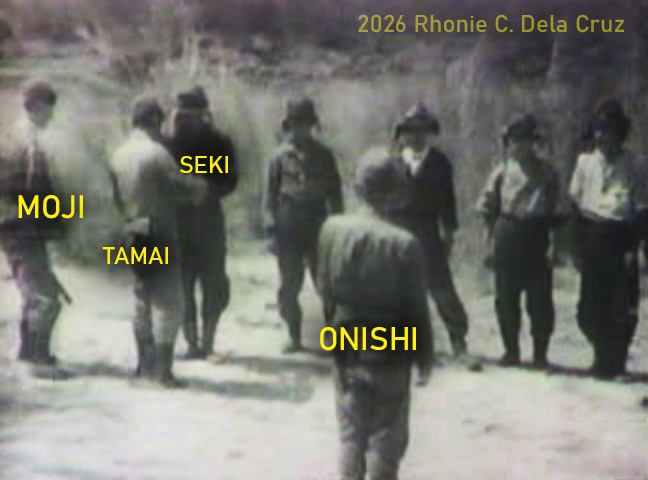
of the Japanese Special Attack at the dry riverbed of the Bamban, October 20, 1944.
LETTER FOR THE PEOPLE OF BAMBAN 門司千佳典のバンバンの人々への手紙
Before I left Japan in October 2001, I visited Mr. Moji for the last time at his house in Oisho. He gave me different materials, WWII mementos and some of his personal items and references including manuscripts related to their stay at the Bamban tunnel navy headquarters, photos, books, and even maps. From among those collections, is a letter. Allow me to share extract given by Moji-san:
“During WWII, I, as Vice-Admiral Ohnishi’s aide-de-camp, stayed in the tunnels of Bamban. At that time, most of the men I was with later died. I would like to apologize for all the troubles and others that we caused the people of Bamban at the time. Wars are very unhappy events which caused many casualties not only among the fighting men but also bring many sufferings to the people of those countries which became battlefields, who are made victims.
I was impressed by learning about how Mr. Rhonie Dela Cruz, working as head of the Bamban Historical Society, earnestly researched the old battlefields of that time, and studied their history. To all of you from Bamban, stay well and I pray for your continuing good health.”
Moji Chikanori
Former adjutant,
V/Admiral Ohnishi Takijiro
Staff, 1st Air Fleet
October 2001
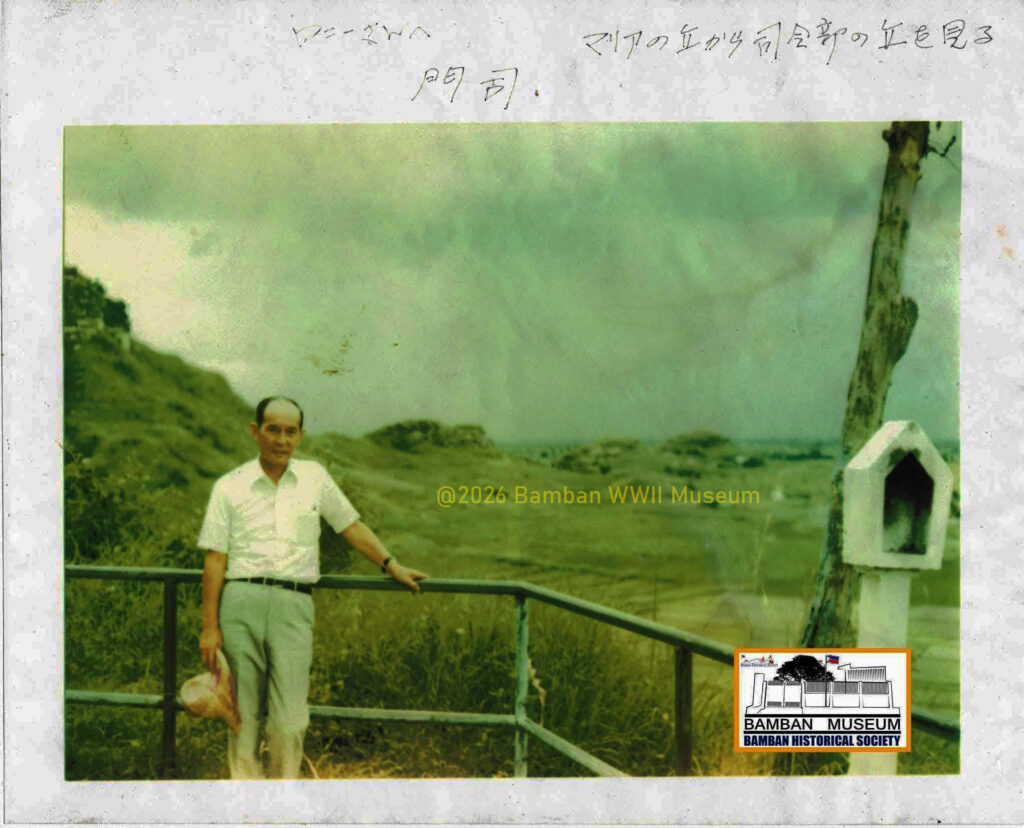
MOJI CHIKANORI’s COLLECTION AT BAMBAN MUSEUM バンバン美術館の門司親則コレクション
About six years after I left Japan, I received a call from my brother Romel who was based at Yokosuka, Japan, informing me of the passing of my friend Moji-San. All the collections he gave me are now part of the materials of the Bamban Center for Japanese Studies, along with the other collections I gathered from several former soldiers and officers who served in Bamban-Clark area. Even today, I continuously received such materials from family of soldiers who served, and some died in Bamban during the war. Many of these are in permanent display at Bamban Museum, including the photos, maps, and books of the former aide-de-camp of Vice-Admiral Ohnishi.
Because of Moji’s openness and his acceptance on my numerous visits, I was able to gather personal information on the historical narratives of the Japanese perspective of WWII in the Clark-Bamban area, which I am using as part of my references and citations in writing WWII History.
Bamban Historical Society Collection, Bamban, Tarlac.
KAZUHIKO MOJI 門司一彦
In 2020 and 2023, his son, Kazuhiko, dean at Nagasaki University, came to visit me and toured the WWII sites where his dad stayed during his sojourn at Clark-Bamban area, including the tunnel headquarters of the 1st Combined Air Fleet, Imperial Japanese Navy, the former Santos House (now KFC Mabalacat City) who was the former headquarters of the Air Group 201 where the Japanese Navy Special Attack Force was organized and the place where the first ceremony of the Special Attack was held at the banks of the Bamban River near the western edge of the Mabalacat West Airfield.
OFFICIAL TRANSLATION OF MOJI’s BOOK モジの著書の公式翻訳
Most important was the official translation of Moji Chikanori’s book; At the Far End Between the Sky and the Sea – Reminiscences of the First Air Fleet Adjutant, which I considered to be the most comprehensive historical narratives on the Japanese perspective, of the Imperial Japanese Navy Air Force under Vice-Admirals Onishi and Fukutome at Clark area in the closing months of 1944.
His son Kazuhiko made the effort for the official translation of his father’s works, which he gave me to be used in our study, research and publication.
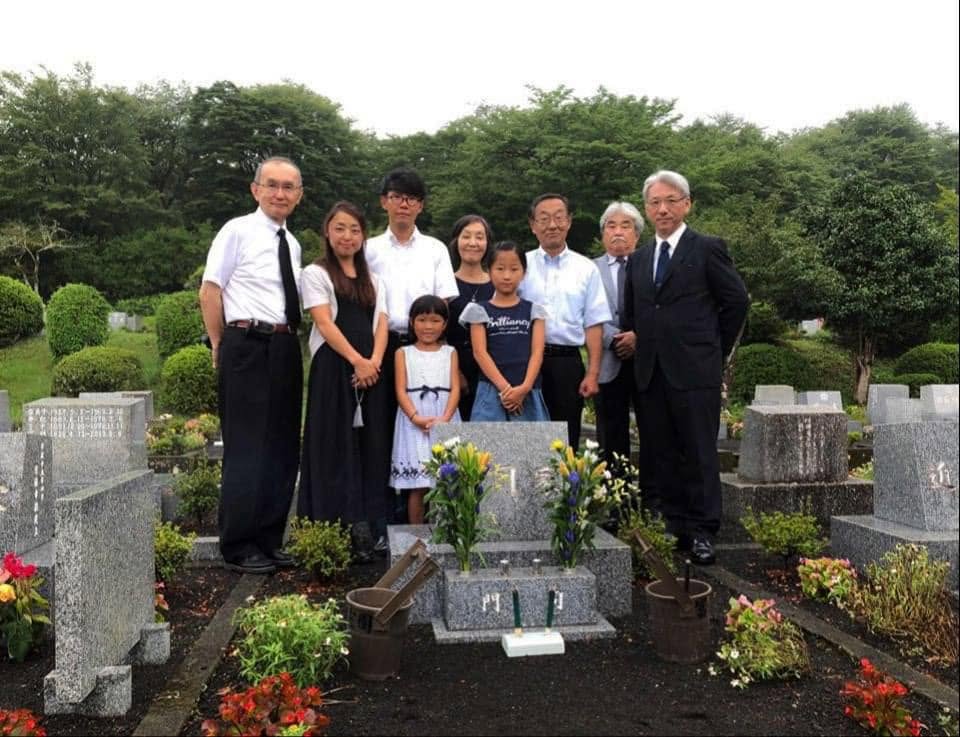
IN MEMORIAM 門司親憲を偲んで
Every August 16, the day reminded me of my dear friend Papa Moji. “Rest in Peace, Moji-San!”
Courtesy of Naoki Koudachi
Rhonie Dela Cruz
Bamban Historical Society
Bamban Museum of History
CITATIONS:
(a) Inoguchi, Nakajima and Pineau. The Divine Wind – Japan’s Kamikaze Force in WWII. Maryland: United States Naval Institute, 1958.
(b) Chikanori, Moji. At the Far End of the Sea and Sky For the Spirits of the Dead Soldiers – A Visit to Philippine Islands. translated by Hitoshi Jin Arai. Tokyo, Japan: Koshinsha, 1989.
(c) Chikanori, Moji. Reminiscences of Admiral Ohnishi. translated by Jin Arai and Takaoki Fusejima. Tokyo, Japan: Kosjinsha, 1989.
(d) Chikanori, Moji. Letter of Moji to the People of Bamban, October 2001. Bamban Historical Society Collection, Bamban Museum, Bamban, Tarlac.