Investigating History:
Forgotten Conflicts of Philippine-American War 1899-1900
THE BATTLE OF PARUAO LINE, NOVEMBER 9 – 11, 1899
In the aftermath of the capture of Mabalacat by General MacArthur’s 2nd Division, 8th US Army Corps on the main front along the railroad and road to Tarlac on November 8, 1899, with the 1st Brigade under General Joseph Wheeler deployed at the town center, other units of the American division were dispersed to the left (Col. F.J. Bell with his 36th US Infantry Volunteers) based at the old barrio of Dolores, Mabalacat and to the right (Col. Jacob H. Smith 17th US Infantry) in the town of Magalang.
The Filipino forces were holding at the line at Yba Hill (Lafe), consisting of more than 3 companies entrenched on the front of the ridge nose and another trench line on the southern peak of the hill. To the east, there was a strong force of Filipino forces, a battalion size at the barrio of Masapinit, near the junction of the Magalang-Mabalacat-Concepcion Roads.
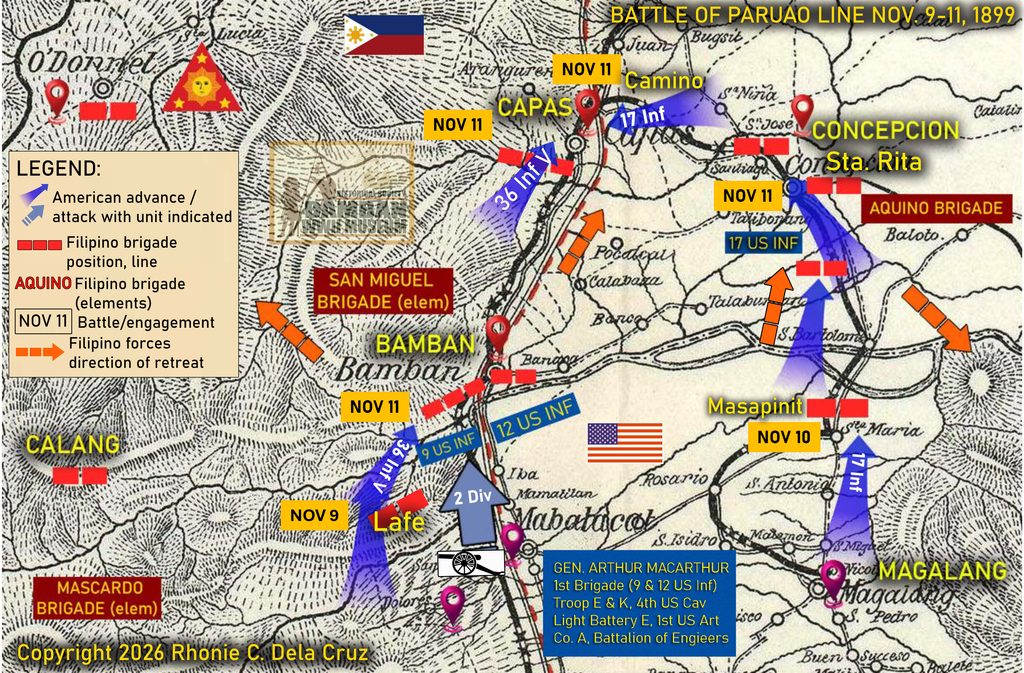
Map edited to conform to the map of operations and the defense of the Paruao Line, by Rhonie Dela Cruz.
Gen. Arthur MacArthur needed intelligence information on the strength of the Filipino forces facing his 2nd Division. Prior the advance to the main front at the Bamban, where in September and October, elements of the San Miguel Brigade were posted in the area, Col. J. Franklin Bell was tasked to conduct reconnaissance to the north, as well as 2nd Lt. Slavens of the Headquarters Scout.
On November 9, 1899, Col. Bell, with elements from Troop K, 4th US Cavalry, conduct recon on the Filipino stronghold of the Yba Hill, finding the strong Filipino defenders entrenched on the entrance of the ridge. Instead, Col. Bell’s contingent from his 36th US Infantry Regiment (V) detoured and attacked the Filipino line entrenched at the southern peak of the ridge with more than 100 defenders commanded by a captain, where brutal combat ensued, leading to the capture of the hill. This was the start of the Battle of the Paruao Line in Bamban and Concepcion that was defended by elements of San Miguel Brigade (on main line) and Aquino Brigade to the east at Masapinit and Concepcion. Fighting at Yba Hill was so intense with the Filipino defenders holding position until become untenable, whereby 2 Americans were awarded the Congressional Medal of Honor.
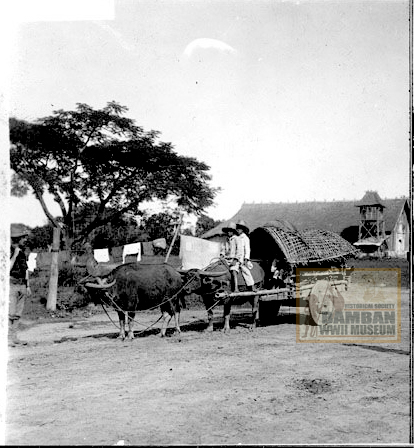
as appearing in this photo taken in November 1899.
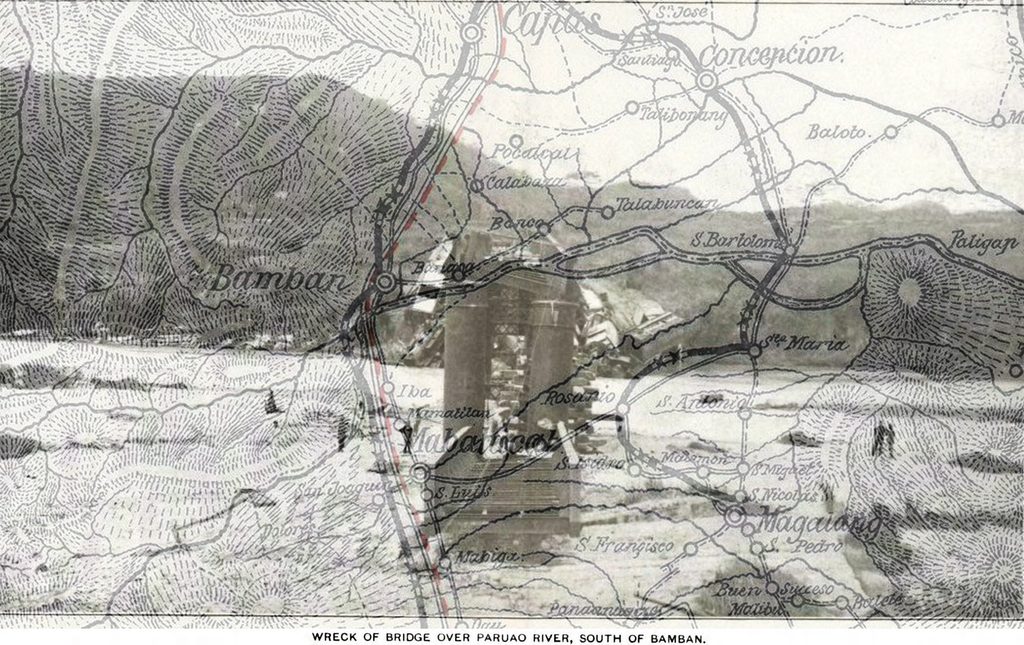
From the vantage point of the Yba Hill peak, Col. Bell was able to ascertain the Bamban Aguinaldo’s trenches and defense line, while at the same day on the following day, November 10, 1899, 2nd Lt. Slavens of the Headquarters Scouts and Col. Bell were already on foot at the southern banks of the Paruao Line, looking into the wrecked bridge, were locomotives and train engines were observed to have been dumped at the bottom of the bridge, where the river flows.
Further to the east, Col. Smith, after the capture of Magalang, was able to ascertain a strong Filipino defense at the barrio Masapinit, north of the junction of the Magalang-Mabalacat-Concepcion Road. The reinforced battalion size Filipino forces were under the Aquino Brigade, holding the advance of the 17th US Infantry. On November 10, 1899, Company A and C under the command of Capt. Edward Chynoweth, 17th US Infantry, begun the attack at Masapinit, where 29 Filipinos were killed and 4 wounded; the survivors retreating into the town of Concepcion.
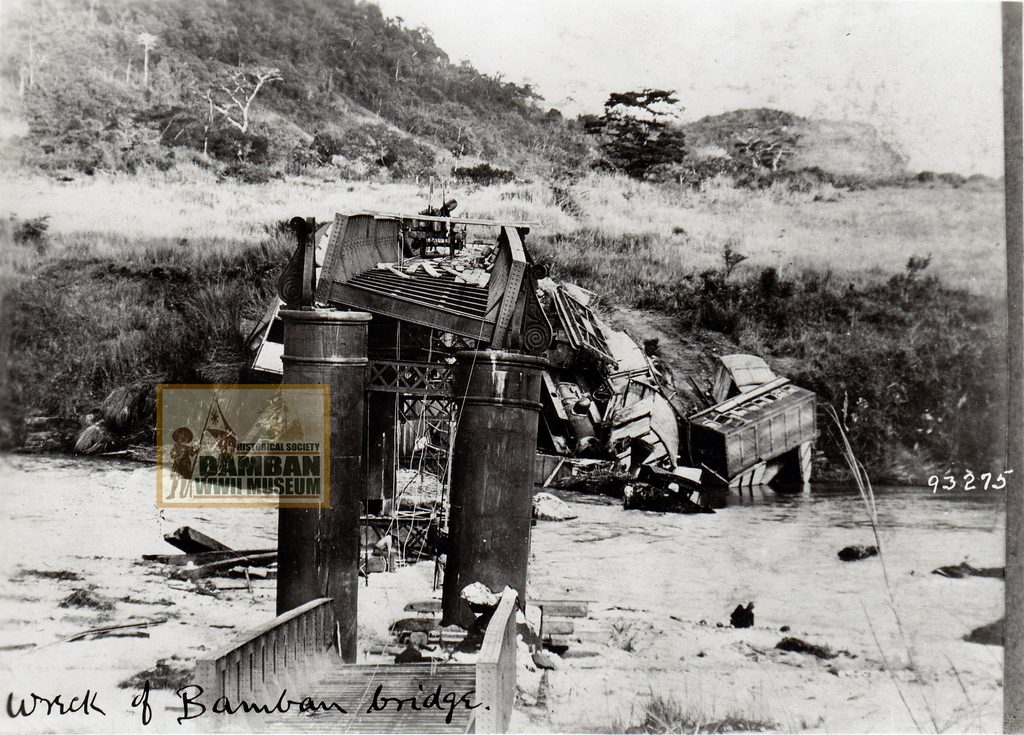
elaborate Gen. Aguinaldo’s trenches. Bantiti Hills, which were then forested, can be seen in the background.
US NARA photo, courtesy of Dave Metherell/Scott Slaten.
Aside from the reconnaissance missions of the 36th and 17th US Infantry, as well as the Headquarters Scouts of the 2nd Division, there was also a storm that passed. By early morning of November 11, 1899, Gen. MacArthur, with his Light Artillery E, 1st US Artillery, Company A of the Battalion of Engineers and his 1st Brigade (9th and 12th US Infantry commanded by General Joseph Wheeler), begun the advance to Bamban Paruao Line.
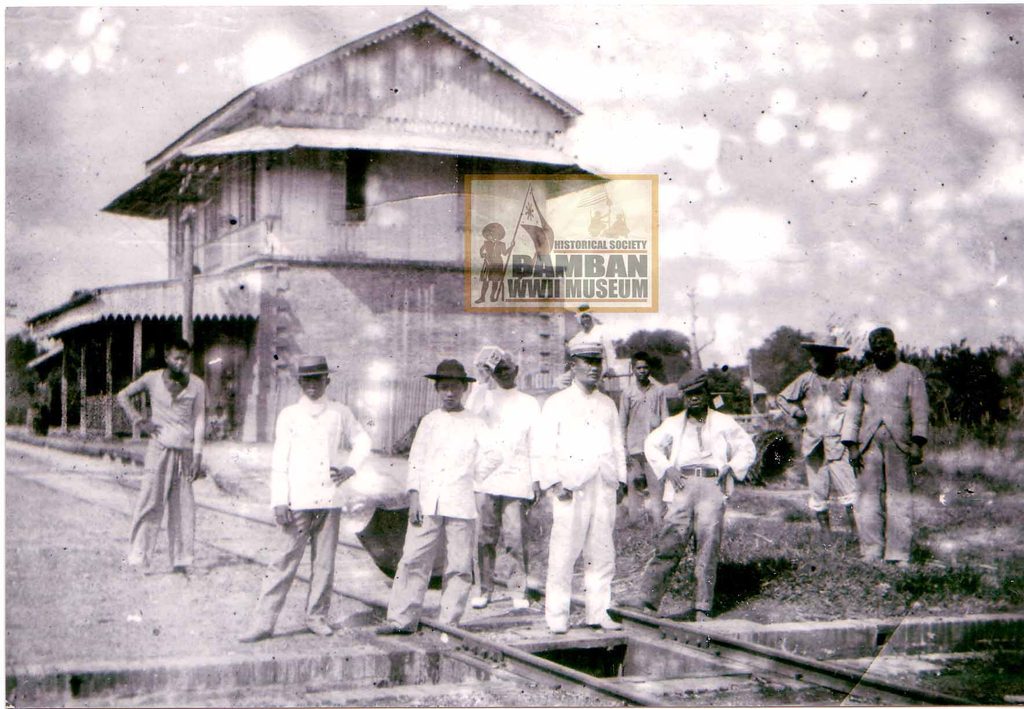
Bamban WWII Museum Collection
To the east, Col. Jacob Smith’s 17th US Infantry, with a platoon of Hotchkiss 3.2-inch field gun, begun also the advance into Concepcion town, where Filipino defenders were entrenched north of Masapinit, between the villages of Sta. Rita and the latter village.
Col. Bell’s regiment begun its flanking attack from the rear, crossing the Mabanglu River and holed on the Bantiti Hills and Rotary, with a 1.65-inch mountain gun and Colt automatic machine gun. On the morning of November 11, the Hotchkiss field guns of Gen. MacArthur begun firing, signaling the attack on the Filipino defenders entrenched, simultaneously with that of Col. Smith’s 17th US Infantry into Concepcion.
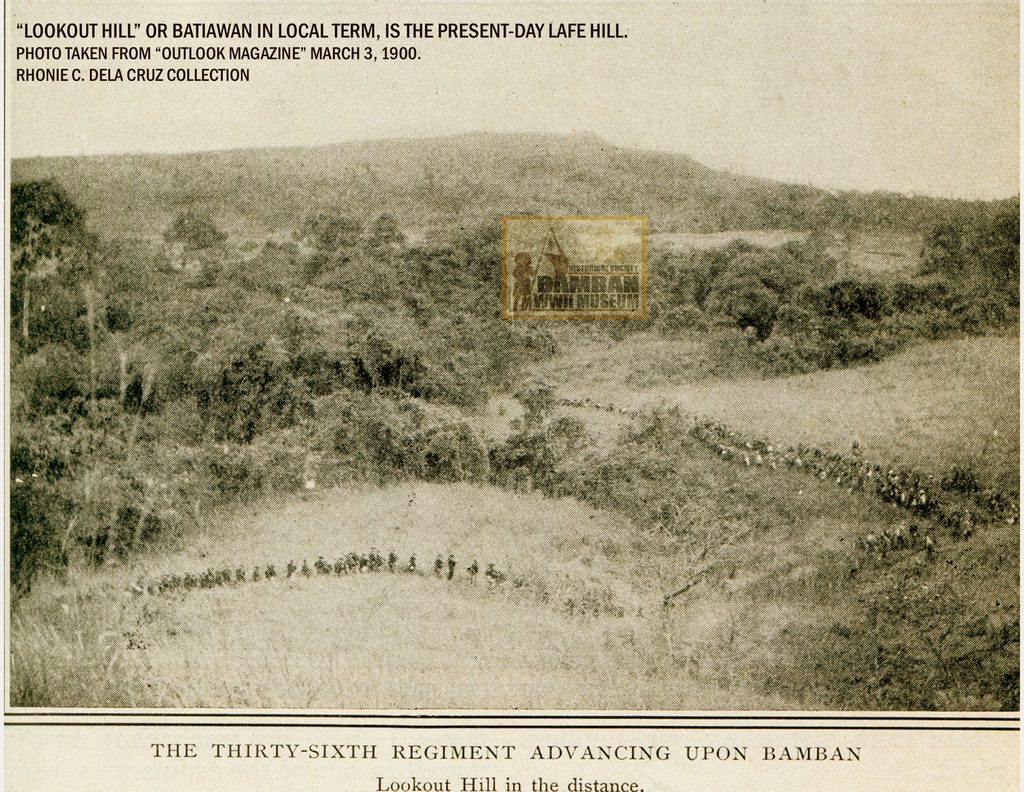
Photo taken approximately the early morning of November 11, 1899. Bamban WWII Museum Collection
The 9th and 12th US Infantry, occupying the lines along the railroad line, begun crossing the Paruao River, under fire from the Filipino defenders entrenched, while Col. Bell made the flanking attack of his 3 battalions, firing the mountain gun and the Colt machine gun into the Filipino trench lines below. The frontal attack of General Joseph Wheeler’s 1st Brigade and the continued firing of the Hotchkiss field guns of the 1st US Artillery led the collapsed of the Filipino defense of the Bamban, retreating on 2 directions in order to avoid capture.
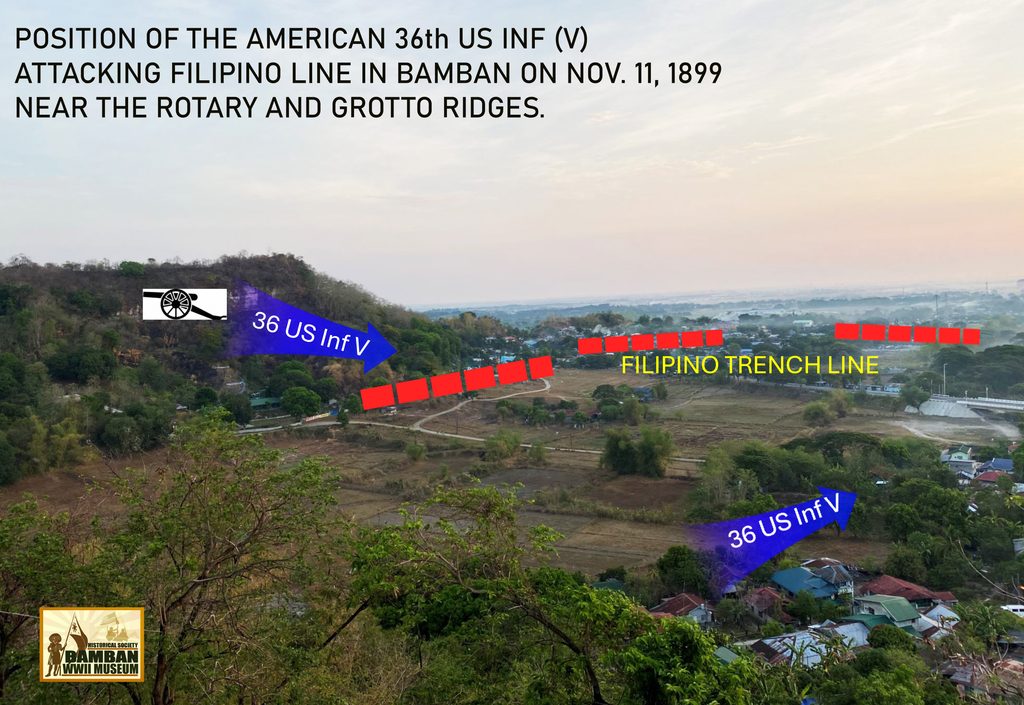
during the battle on November 11, 1899.
Rhonie Dela Cruz photo.
The Filipino defenders at Concepcion were facing similar infantry and artillery attacks, leading to the fighting in the town center and at Sta. Rita. The contingents of the Aquino Brigade fighting in the defense of the town retreated into Mt. Arayat, while strugglers went further to the north. Gen. MacArthur and his 1st Brigade entered Bamban around 9-10 in the morning and settled at the town center, most probably near the church and established headquarters with his 1st Brigade. To the northeast, Col. Smith continued to conduct combat operations on surviving small numbers of Filipino defenders retreating, until reaching the village of Camino in the northern side of Capas in the afternoon.
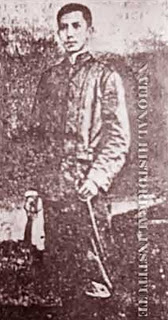
from his brigade were posted in the
Bamban Line in the latter part of
1899 before the Battle on November 11.
While the 2nd Division took rest for the day, Col. Bell and his regiment immediately begun its march and advanced along the road and railroad line to Capas in the frontal and flanking maneuver to capture any elements of the Filipino forces running for retreat in the aftermath of the Battle of Bamban Trenches.
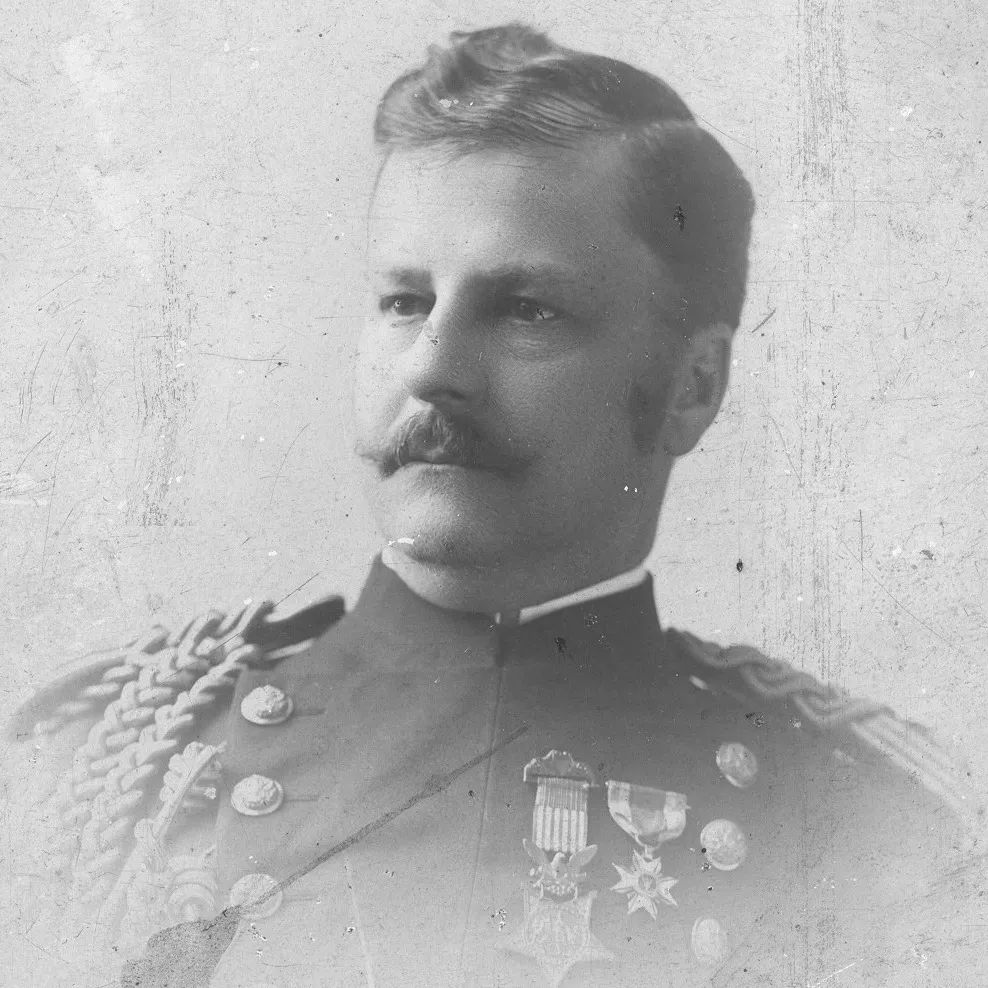
on November 9-11, 1899. In January 1945, his son, General Douglas MacArthur, would also enter the Bamban during the
advance of the Sixth US Arrny for the Liberation of the Philippines in 1945.
On the afternoon of November 11, 1899, some survivors from the Bamban trenches, about 200 men, were coming out of the railroad line in Capas, carrying the white flag or the Flag of Truce. Elements of the 2nd Battalion, 17th US Infantry and Troop K, 4th US Cavalry, without giving concern on the Flag of Truce carried by the Filipino soldiers, shoot and killed many of the survivors. Thus, the start of the occupation of Capas by the Americans was the tragedy near Camino.
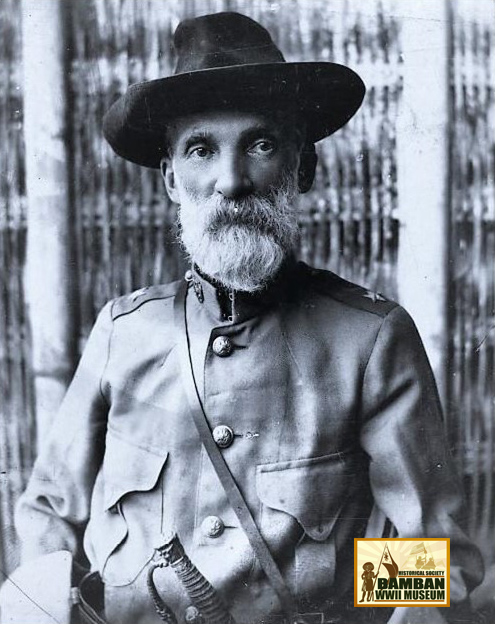
with his 9th and 12th US Infantry, during the Battle of Paruao Line in
November 1899.
US NARA Photo courtesy of Dave Methrell/Scott Slaten.
Thus, also ended the campaign of Gen. Arthur MacArthur’s 2nd Division, with his frontal and flanking movements of attack against the Filipino forces at the Paruao on November 11, 1899. On the following day, the rest of the 2nd Division were able to cross the Cutcut railroad bridge after some repairs, the 1st Brigade and the artillery were taken at the town center, at the plaza in front of the church, while Gen. MacArthur, with his division headquarters, stayed at the Capas Train Station, before moving to the next objective, TARLAC, TARLAC.
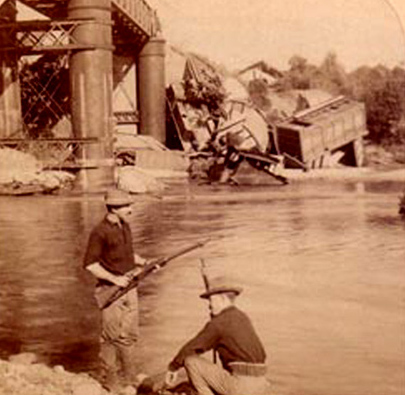
guarding the wrecks of the Bamban railroad bridge in
Bamban, November 1899 after the capture on the 11th.
2026 Rhonie Dela Cruz
Bamban Historical Society
Bamban WWII Museum
Tarlac Provincial Tourism Office