
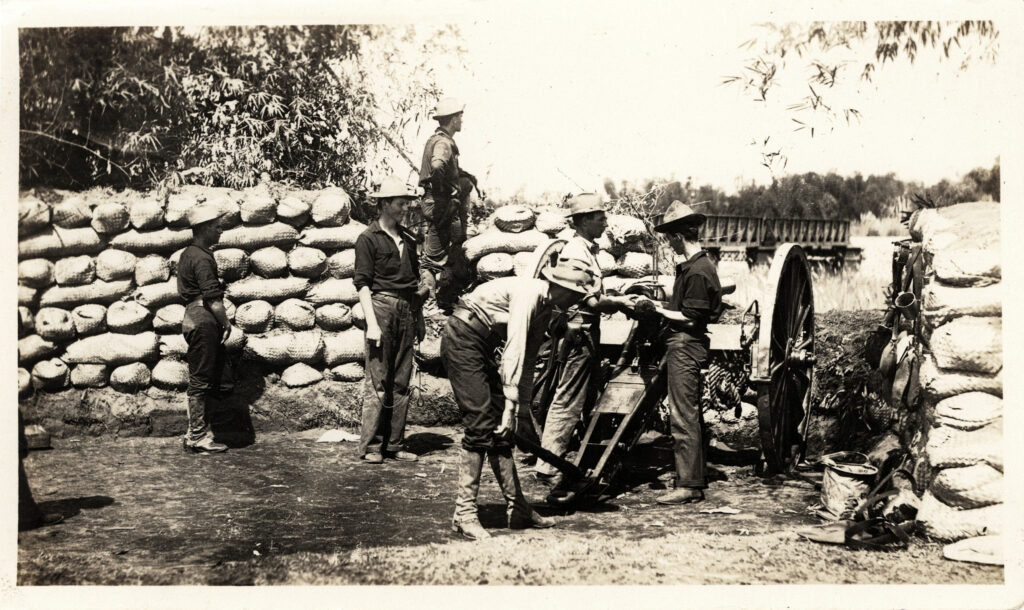
MacArthur’s advance to Mabalacat.
US NARA Photo, courtesy of David Metherell/Scott Slaten
INVESTIGATING HISTORY:
Forgotten Conflicts of the Philippine-American War 1899-1900
GENERAL ARTHUR MACARTHUR’s 2nd DIVISION ATTACK ON FILIPINO LINES, NOVEMBER 2-8, 1899
The period of early November 1899 was an important history of our Nation’s struggle for Independence and freedom during the Philippine-American War. For more than 3 months since the Fall of Angeles (August 16, 1899), the remnants of the Philippine Division that was handed over in command by General Antonio Luna in May 1899 to General Venancio Concepcion and the brigades of Generals San Miguel, Aquino and Mascardo had been holding the main lines at Abacan, northeast of Angeles and south and northwest of Pampanga.
Although Angeles was captured in August, General Mascardo with his brigade had been harrassing the American 2nd Division from the rear and that formidable forces on the main front in Abacan and northeast of Angeles and Magalang were held by General Servillano Aquino. Numerous infiltrations and attacks were conducted by the Filipino forces had impeded General MacArthur’s northern advance, along with the repairs of the railroad line destroyed by Filipino forces and the need for more troop reinforcements that had arrived in October 1899.
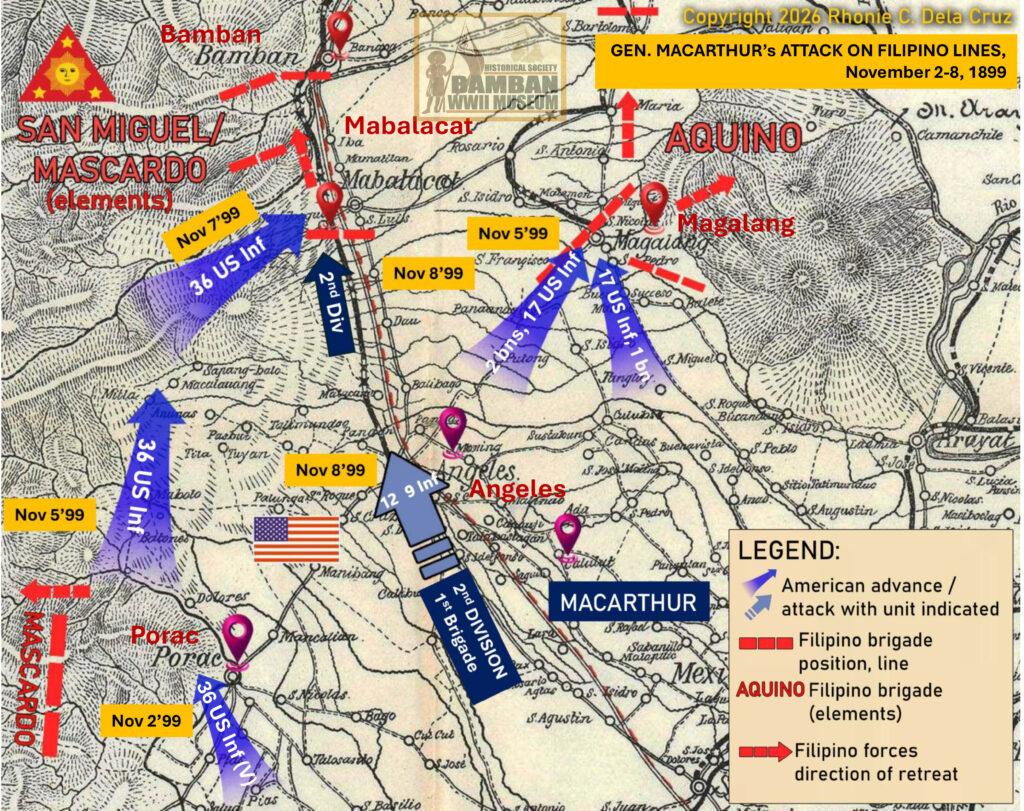
Map by Rhonie Dela Cruz
Although Porac Line held by General Mascardo of the brigade had been breached on September 28, 1899, his forces were still intact and had been conducting numerous attacks on American outposts held by the 36th US Infantry (V) commanded by Colonel Bell. After numerous engagements with the brigade of General Mascardo, most of the towns of south and southwest Pampanga had been cleared.
There was, however, a need to push through and advance into the Filipino lines holding the road to Tarlac, as there were reports of General Aguinaldo’s planned of retreat to the north. This situation prompted General MacArthur’s immediate advance along the railroad line for the capture of General Aguinaldo holed at Tarlac, Tarlac.
Hence, a major movement of forces of the American 2nd Division, along with the 1st Brigade (9th and 12th US Infantry), with the 17th US Infantry and the 36th US Infantry (Volunteers) with artillery support, with the arrival of the month of November, following the failed attempt of the remnants of the Filipino division to capture Angeles in October (October 10-20, 1899).
The following major battles took place, with the heroic resistance of the Filipino forces under the brigades of Generals Mascardo, Aquino and San Miguel (elements):
(1) November 2, 1899: Porac, between Mascardo Brigade and Col. Bell’ 36th US Infantry (V);
(2) November 5: Magalang, between Aquino Brigade and Col. J. Smith’ 17th US Infantry;
(3) November 5-7: Advance to Mabalacat, by Col. Bell, engaged elements of Mascardo/San Miguel Brigade at trenches in Mabalacat;
(4) November 8: advance to Mabalacat, by Gen. MacArthur’s 2nd Division (1st Brigade, with 9th and 12 US Infantry).
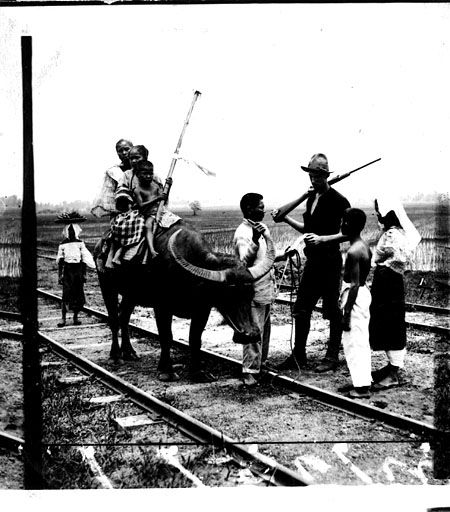
General MacArthur entered Mabalacat on November 8, 1899 but the advance was stalled since there were pockets of Filipino forces around Mabalacat, near Bamban and Magalang that need to be cleared, such as Lafe and Masapinit.
These period of struggles of our Filipino forces only shows our commitment to fight against overwhelming odds, despite the fact that the remnants of the Filipino division had been suffering continuous setbacks.
History had shown of our people’s determination to fight and continue the struggle, on these important dates in our Nation’s forgotten history of resistance.
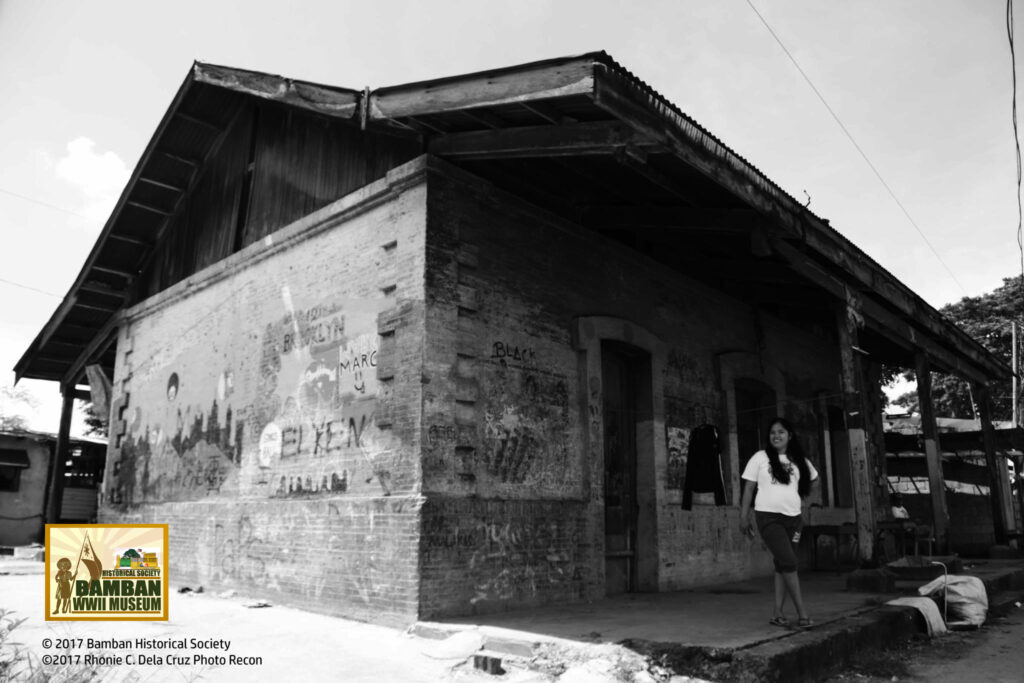
Rhonie Dela Cruz photo.
© 2026 Rhonie C. Dela Cruz
Bamban WWII Museum/Historical Society
PGT – Tarlac Provincial Tourism Office