Battlefield Archeology
RELICS OF WAR IN THE FORMER BATTLEFIELDS: THE QUINAUAN POINT – かつての戦場で発見された遺物:キナウアン・バターン
MEMORIES OF WAR – 戦争の思い出
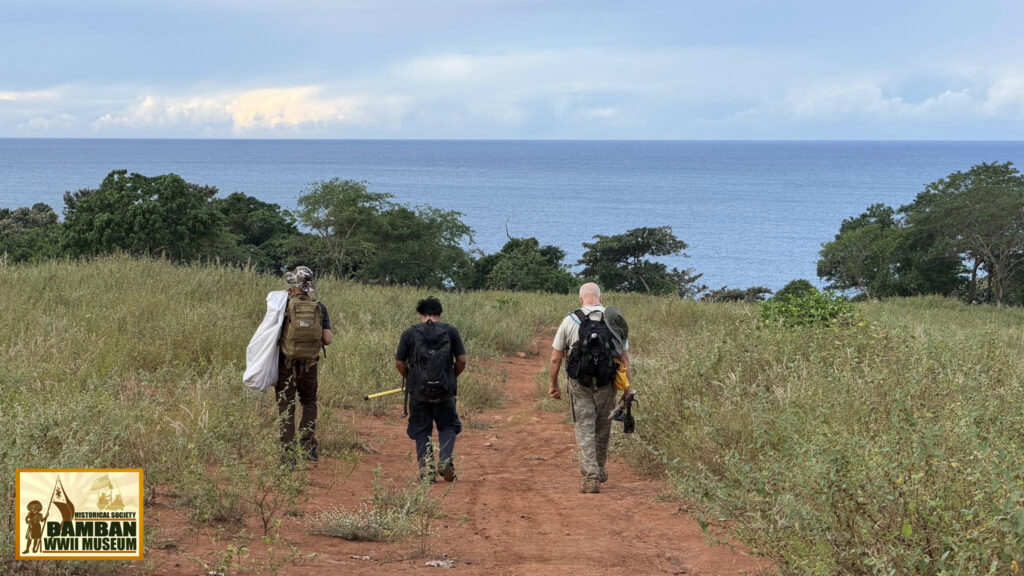
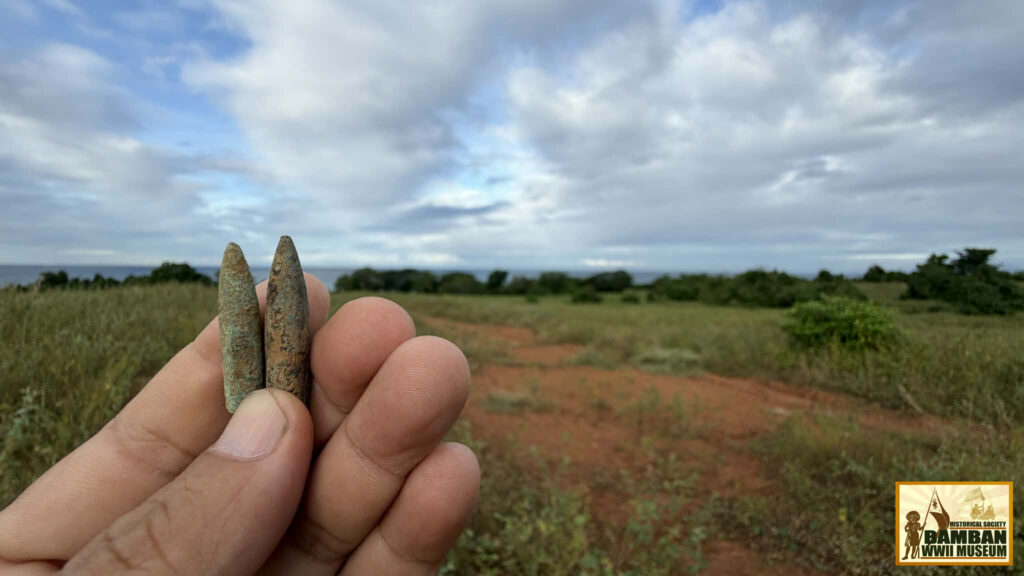
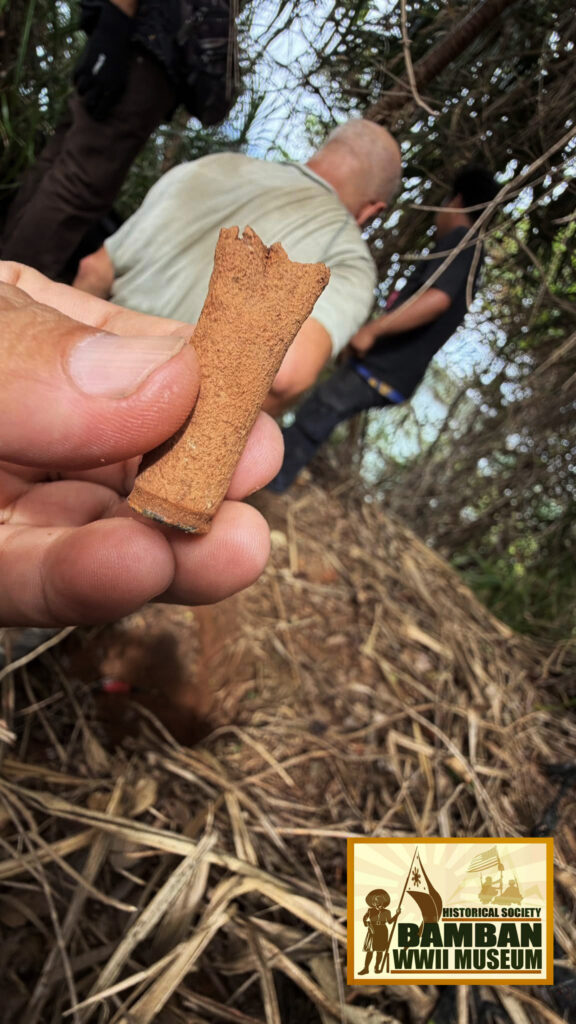
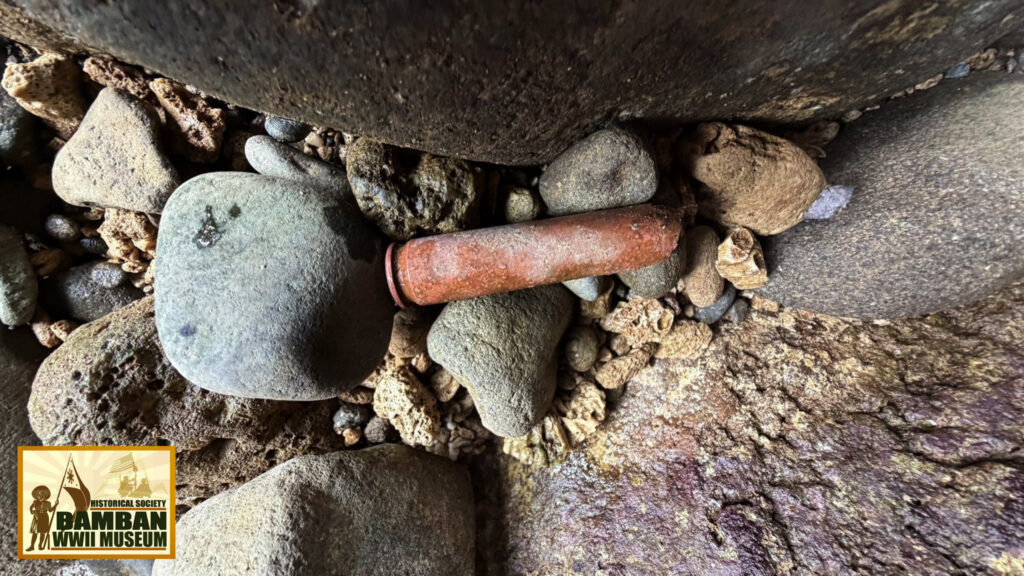
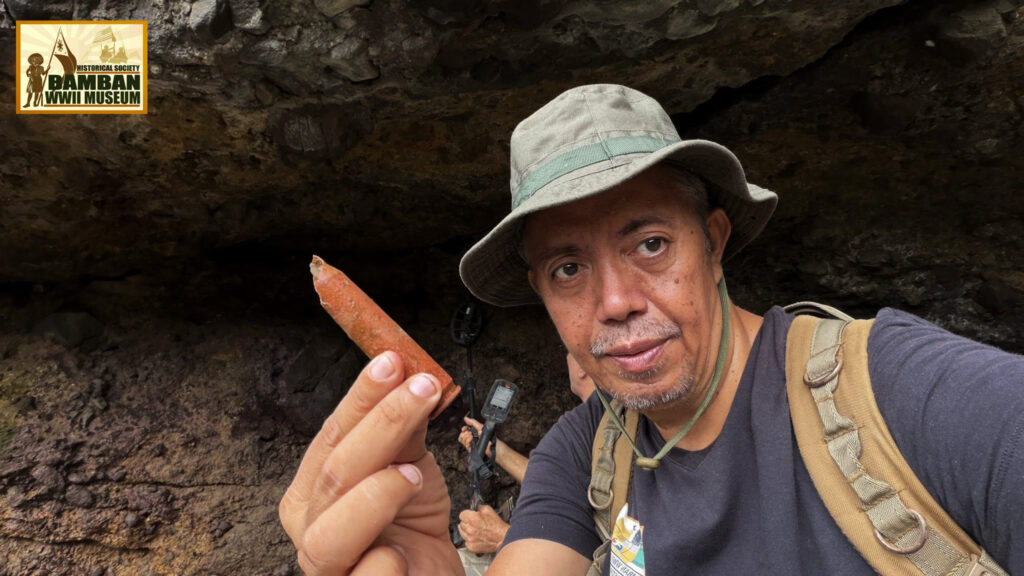
Standing on the spot where battles fought is like going back into history and imagine the struggle of the soldiers fought, bled and many died. In one of our many field recon, I had that opportunity to conduct battlefield survey and archeology. What is more dramatic and historically anxious when you touched the relics of war on the exact spots where Filipino, American and Japanese soldiers fought and fell in the blood-soaked grounds, foxholes and trench lines.
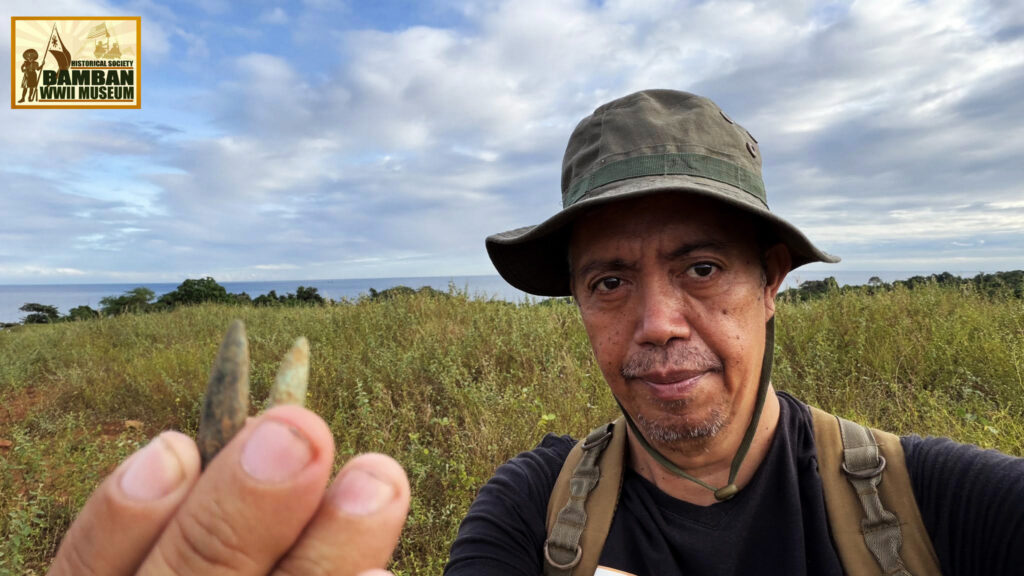
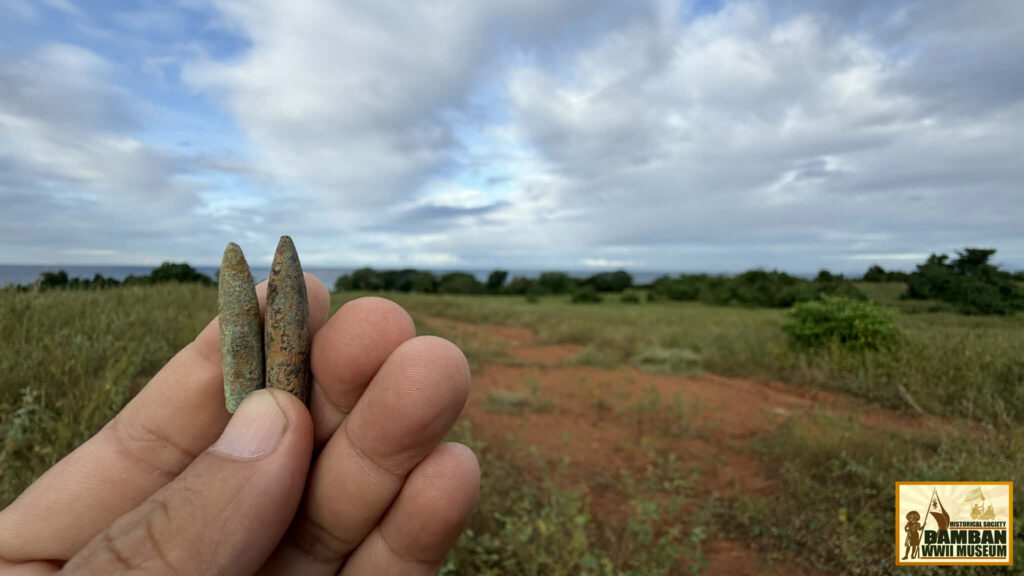
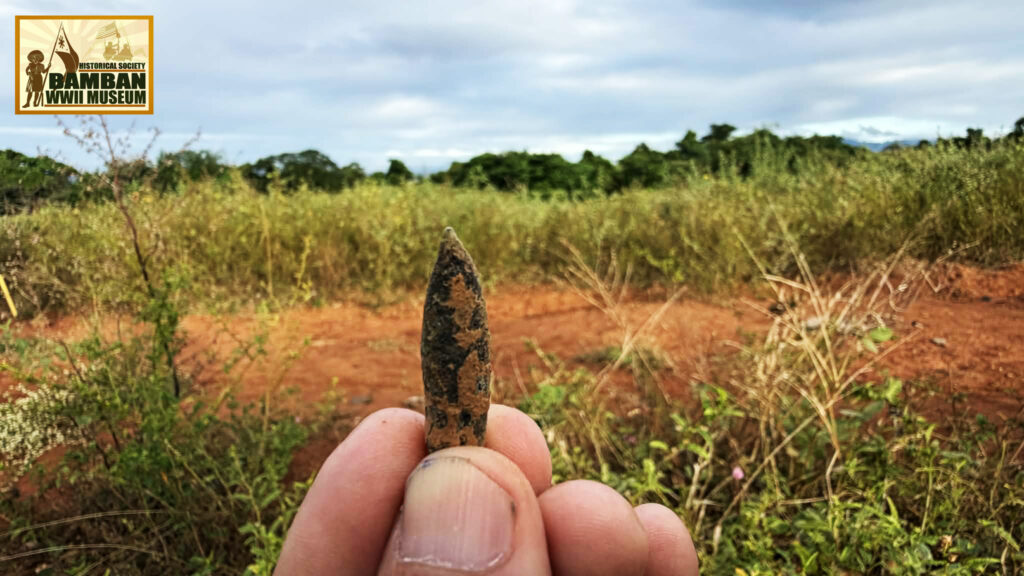
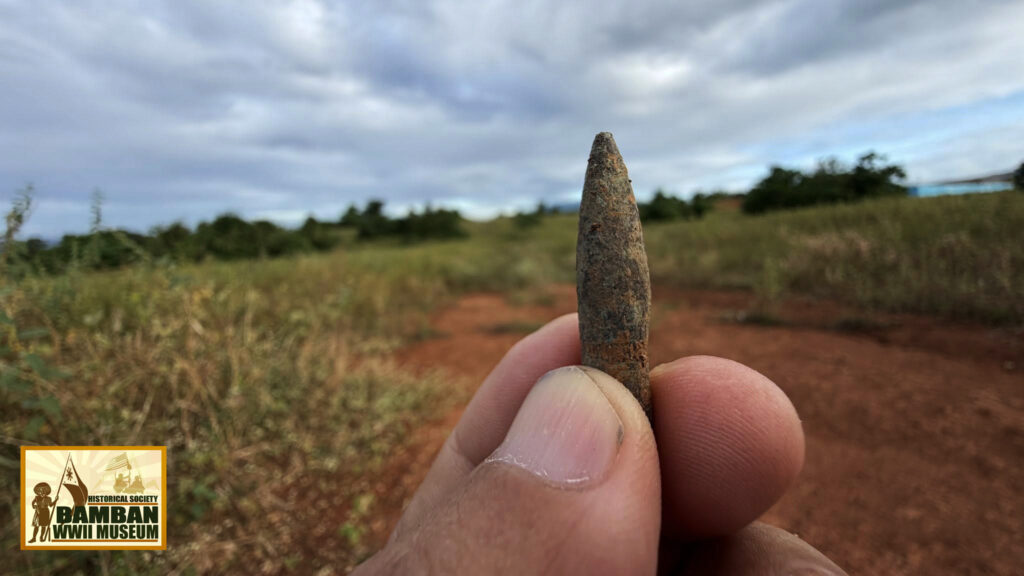
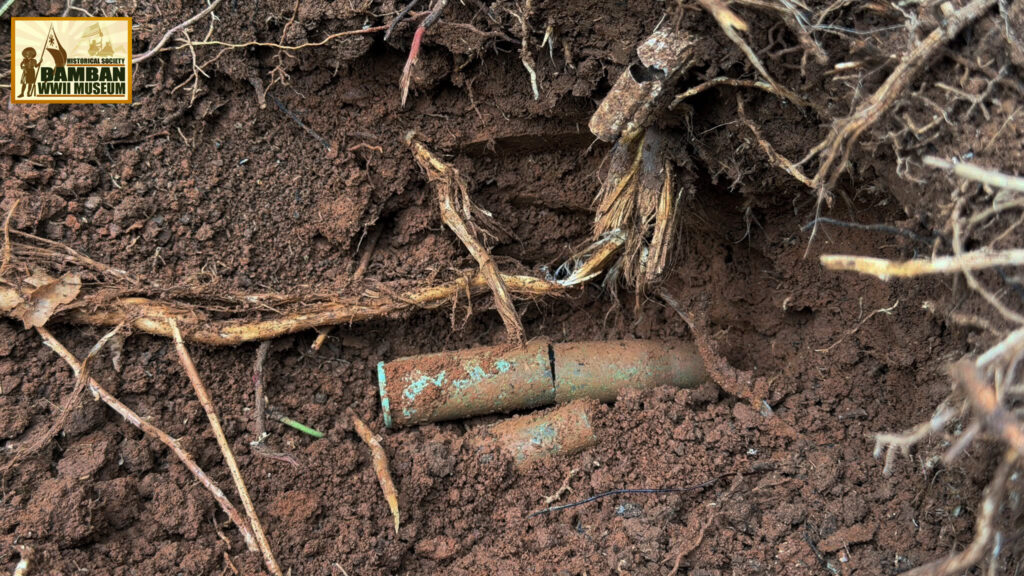
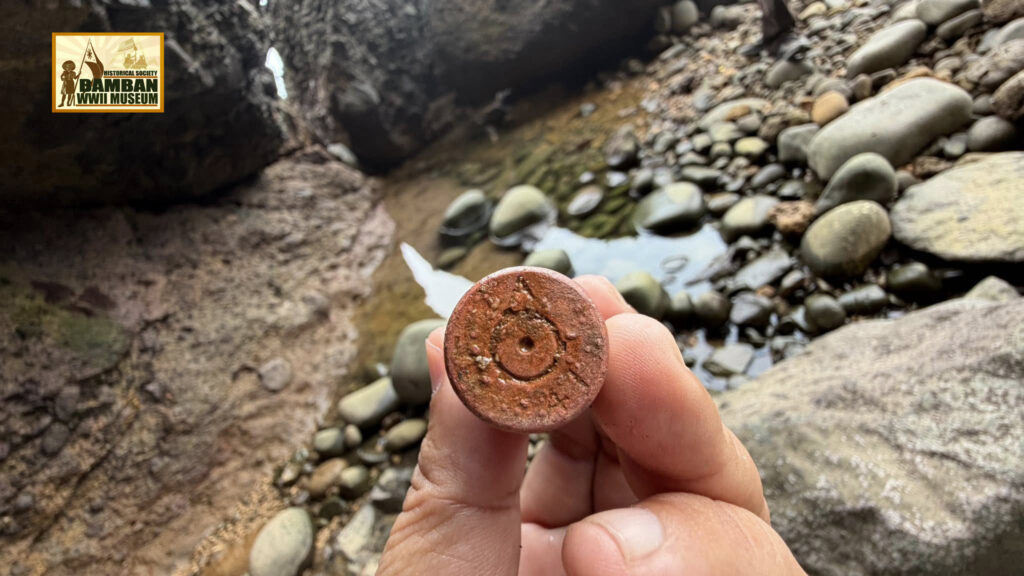
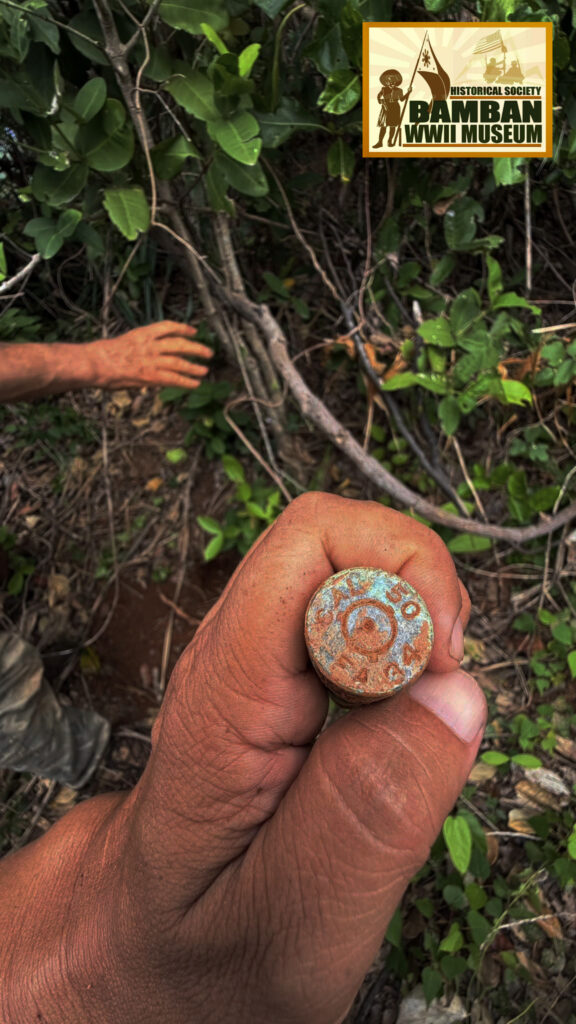
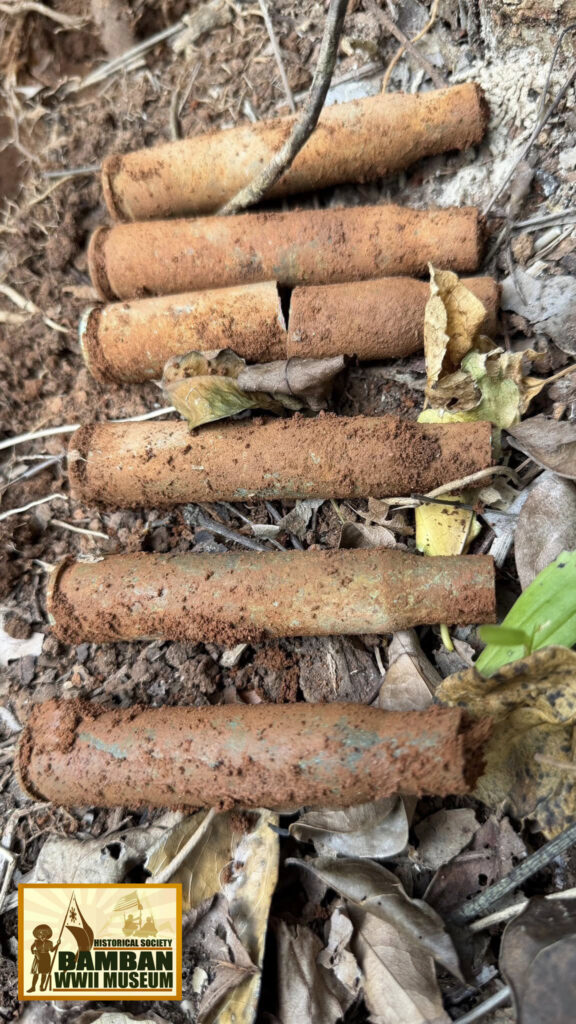
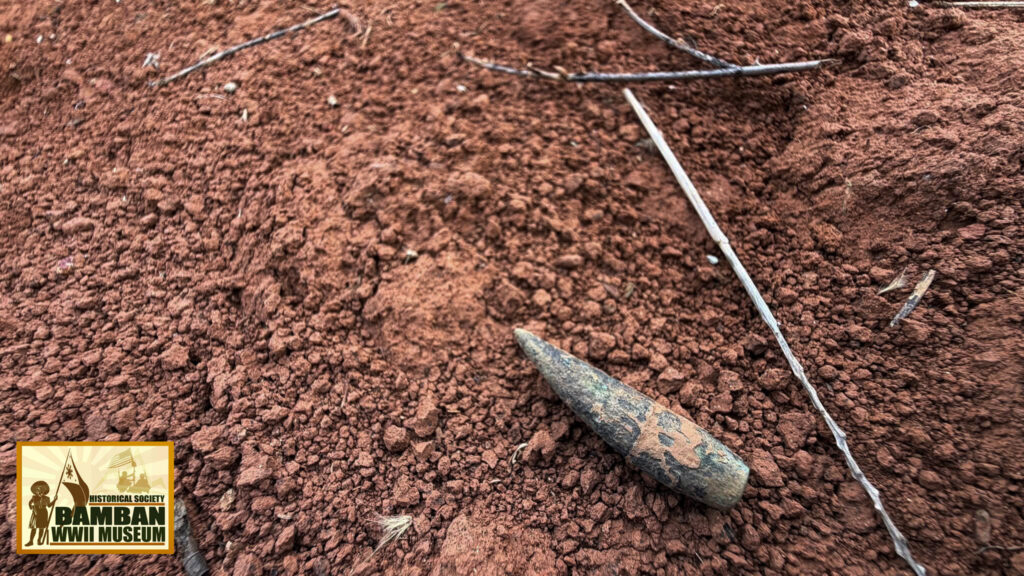
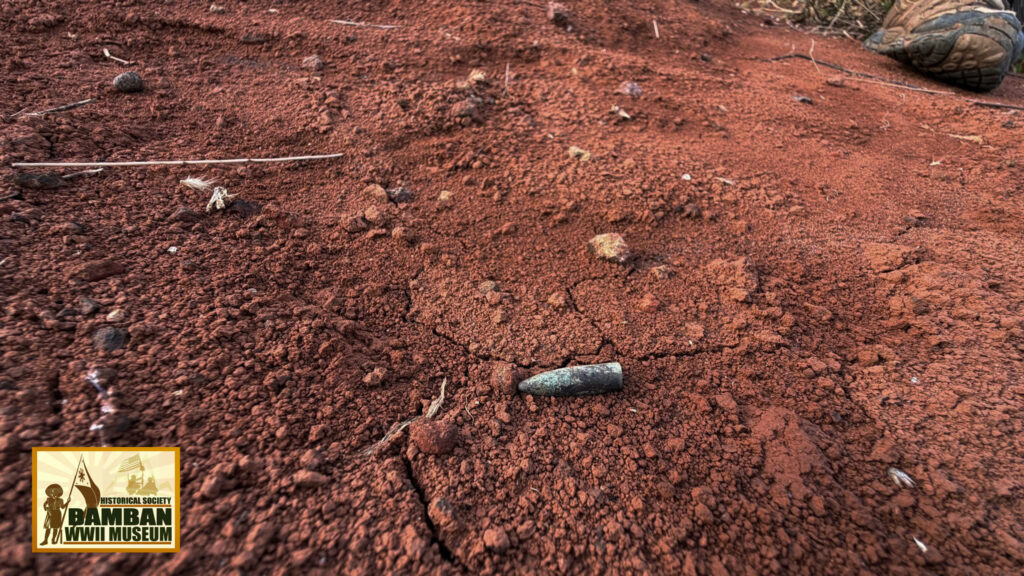
relics of war just like these .30 cal projectiles on what used to be a battlefield.
Eighty-four (84) years ago, the battle at Quinauan Point started on January 23, 1942 when 600 Japanese soldiers from 2nd Bn, 20th Infantry under Lt.Col. Nariyoshi Tsunehiro landed ashore at the Quinauan. The timbered peninsula became one of the sites of the Battle of the Points on the west coast of Bataan.
LT.COL. TSUNEHIRO’s WARRIORS DUG-IN – 常広中尉とその勇敢な兵士たち
Lt.Col. Tsunehiro’s battle-hardened 2nd Bn dug in on the foxholes and trenches (after climbing the vertical cliffs) covering the more than 1 kilometer wide of the point with machine gun, mortars and anti-tank guns; forming first and second line. The objective of the Japanese battalion was to block the West Road which was an important transport and logistical route of the I Corps. Initially, the American airmen from the 34th Pursuit Squadron and later augmented by the 1st Bn, 1st Constabulary (1st Regular Division), under the umbrella command of Gen. Selleck.
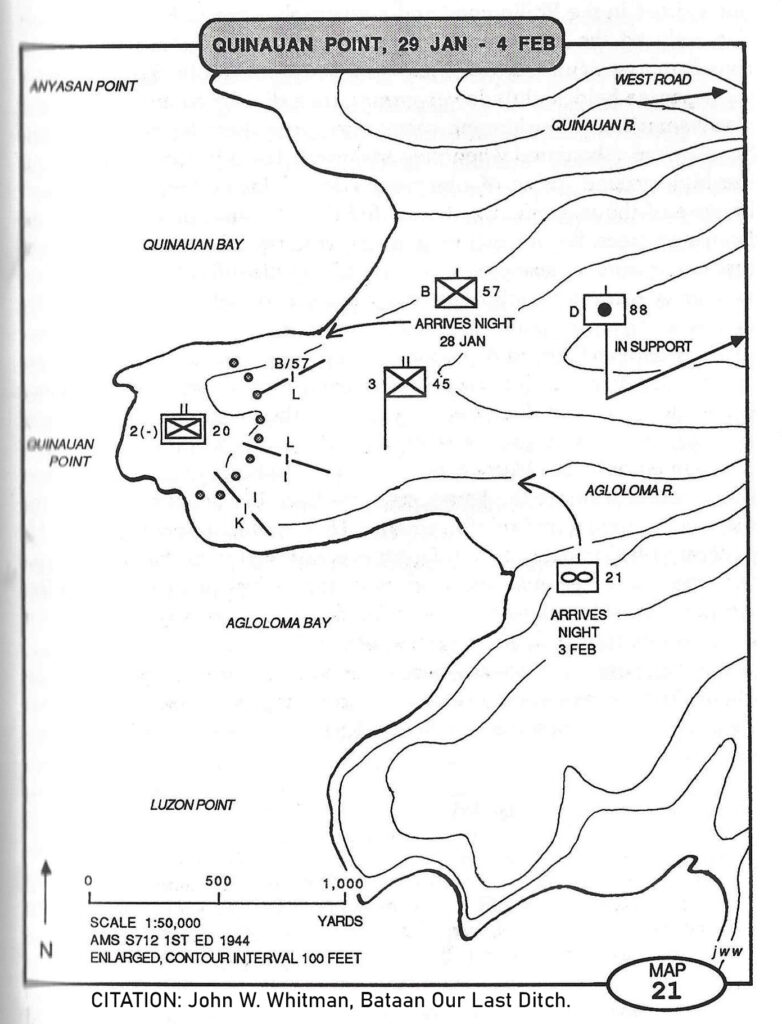
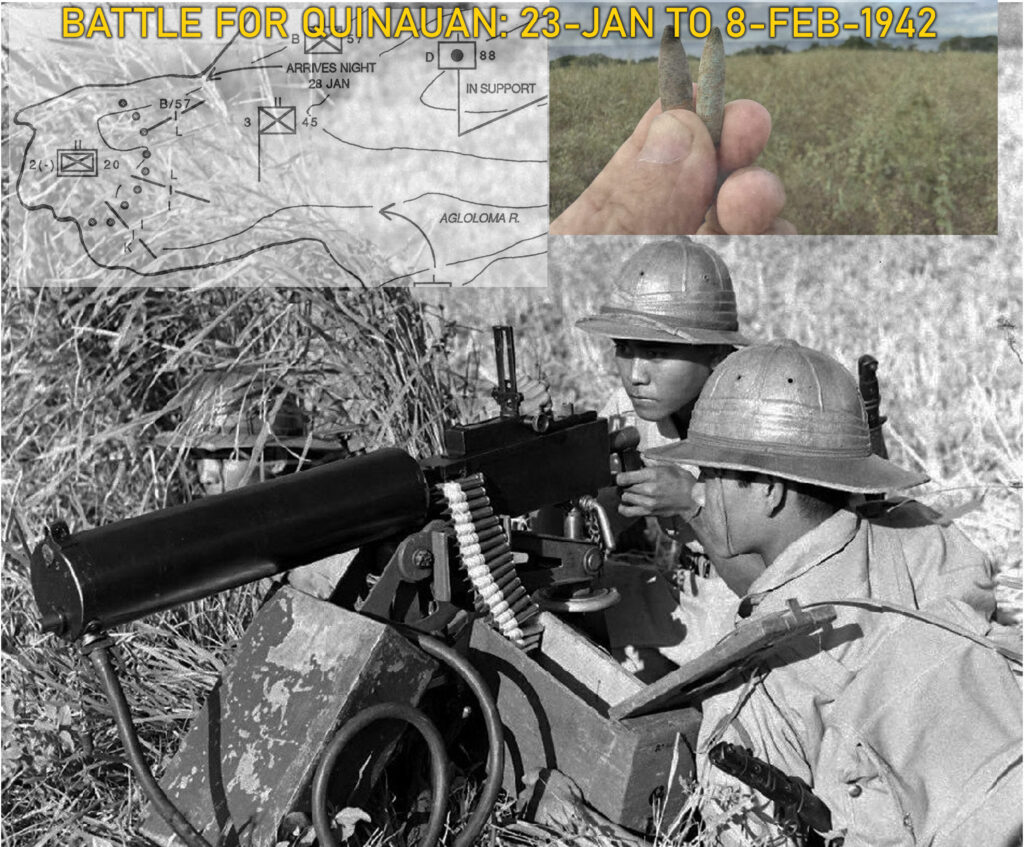
forces and Col. Tsunehiro’s 2nd Battalion, dug-in positions.
AMERICAN AIRMEN AND FILIPINO CONSTABULARY – アメリカ空軍兵とフィリピン警察
The airmen and Filipino soldiers were no match to the well-trained Japanese ferocious stand at the Quinauan. With the failure to dislodge Col. Tsunehiro’s dug-in troops, Brigadier General Clinton A. Pierce (formerly with the 26th Cavalry, P.S.) replaced Gen. Selleck by order of USAFFE HQ. The Filipino and American contingents were armed with .50-cal MGs (from wrecked P40s and Browning water-cooled MGs), Lewis .30-cal, Stoke mortars, automatic rifles and Springfields.
In the following day, Bren gun carrier was brought to the front. Soon, other USAFFE units were brought to the line against the Japanese to include Philippine Army Air Corps auxiliary infantry battalion (Major Pelagio Cruz), Company A, 803rd Aviation Engineers Bn, 1st Bn, 12th Infantry (P.A.), 2nd Bn, 88th FA (P.S.), 21st Pursuit Squadron, HQ 71st Division (P.A.). Despite of these USAFFE ad hoc force, Col. Tsunehiro stood on their grounds.
B Company, 57th Infantry P.S.
ENTER THE PHILIPPINE SCOUTS: 45th and 57th INFANTRY – フィリピンの兵士と戦闘員:第45歩兵連隊と第57歩兵連隊
By January 27, 1942, the battle dragged with no apparent success on the Filipino-American forces. Enter 3rd Bn, 45th Infantry (P.S.), Major Dudley G. Strickler commanding; with K, I and L Company! B Company, 57th Infantry (P.S.) occupied the north area of the Point. The heavily-forested Quinauan had now turned into highly contested battle grounds, with both sides having high casualties but with the Japanese still conducting heavy resistance.
TANK SUPPORT: THE 192nd TANK BN – 戦車支援と第192戦車大隊
On February 2, Gen. Pierce had deployed 3 M3 Stuart tanks from 192nd Tank Bn and later augmented by another 2. Such a small battlefield area became a big battle to dislodge a committed battalion of Japanese
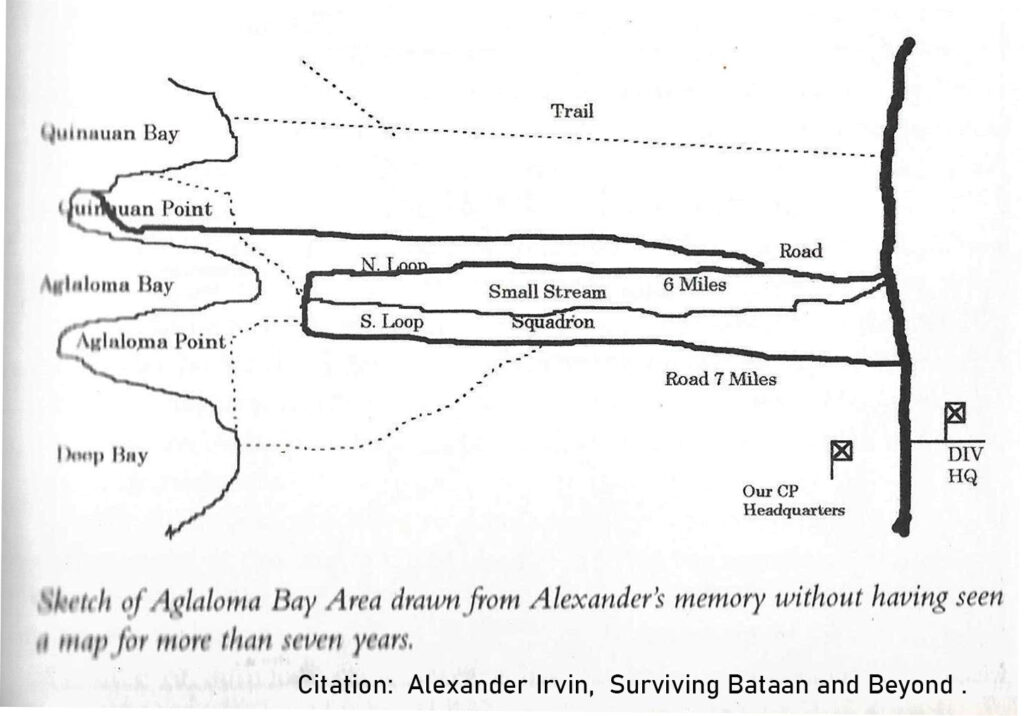
to the West Road, an important transport road that the Japanese wanted
to capture.
defenders. Still, with no end of the fighting, the battle carried on until February 4, when the Filipino-American coordinate attack with the 5 tanks pushed Col. Tsunehiro’s shrinking perimeter into 50 yards on the edge of Quinauan Point.
TSUNEHIRO’s LAST STAND – 常広の最後の抵抗
In the following days, the Japanese survivors of the 2nd Bn, 20th Infantry were pinned on the very edge of the Point, some Japanese jumped into the cliff (north Point). Filipinos and Americans mostly from Philippine Scouts fired machine guns into the beach, where the remaining Japanese forced to congregate. Some tried to swim, only to be machine-gunned.
M1917 water-cooled machine gun, found on the northwest promontory
near the foxhole.
Remnants of the brave soldiers of Col. Tsunehiro finally dug-in into caves along the shore for their last stand. A contingent from 71st Division (P.A.) Engineers and Scouts made the final blow on the survivors by destroying the cave with 50-pound boxes of dynamite! Motor launches under Lt.Cmdr. Henry W. Goodall from USS Canopus armed with anti-tank gun, 2 .50-cal MGs and .30-cal MGs, peppered the location of the Japanese final last stand.
CASUALTIES OF WAR – 戦争の犠牲者
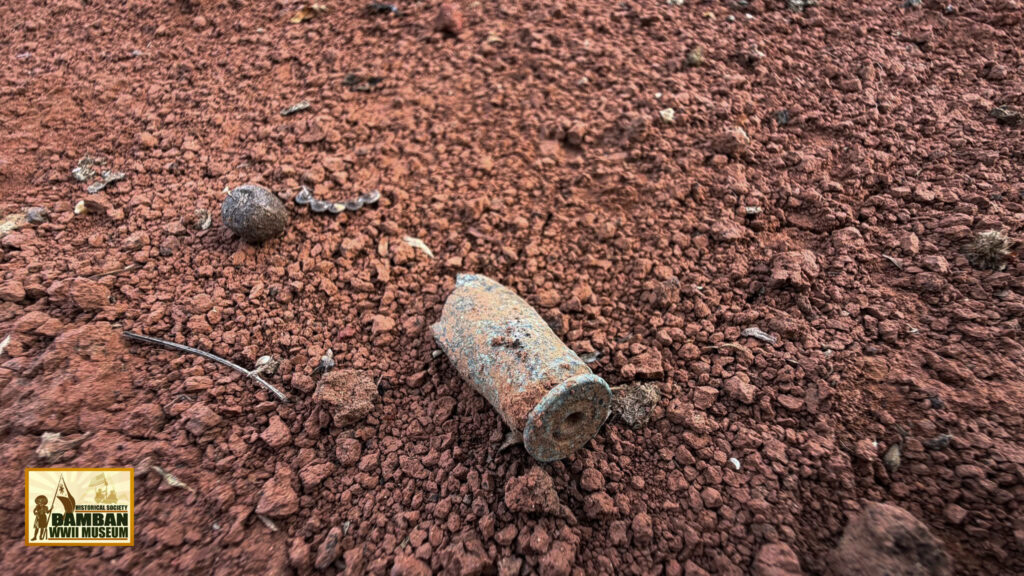
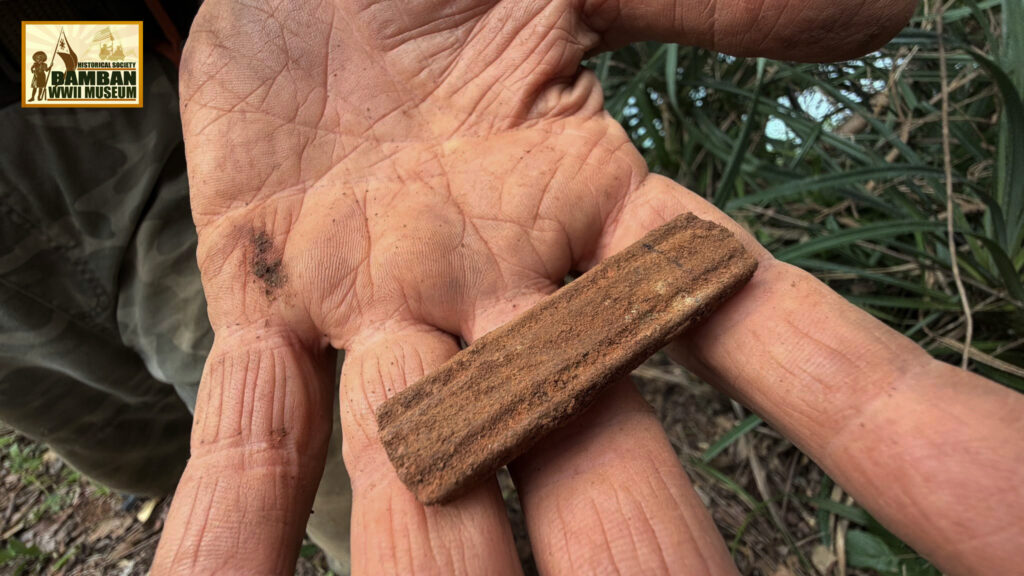
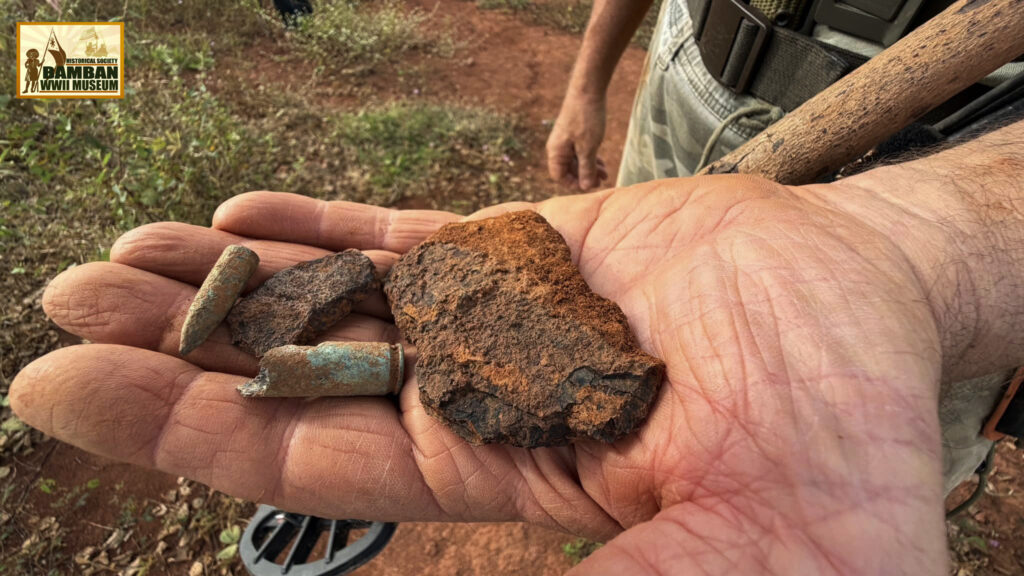
By February 8, the Battle for Quinauan was over! Col. Tsunehiro’s 2nd Battalion was destroyed completely with 900 men dead, while 500 Filipinos and Americans were killed or wounded. The once lush vegetation with forested timber of the Quinauan was turned into a lifeless ground with trees chopped, turning the battlegrounds into a waste land scattered with dud artillery, mortar rounds, projectiles and spent casings of the .50-cal and .30-cal MGs and rifles as well as Japanese 6.5-mm and 7.7-mm projectiles.
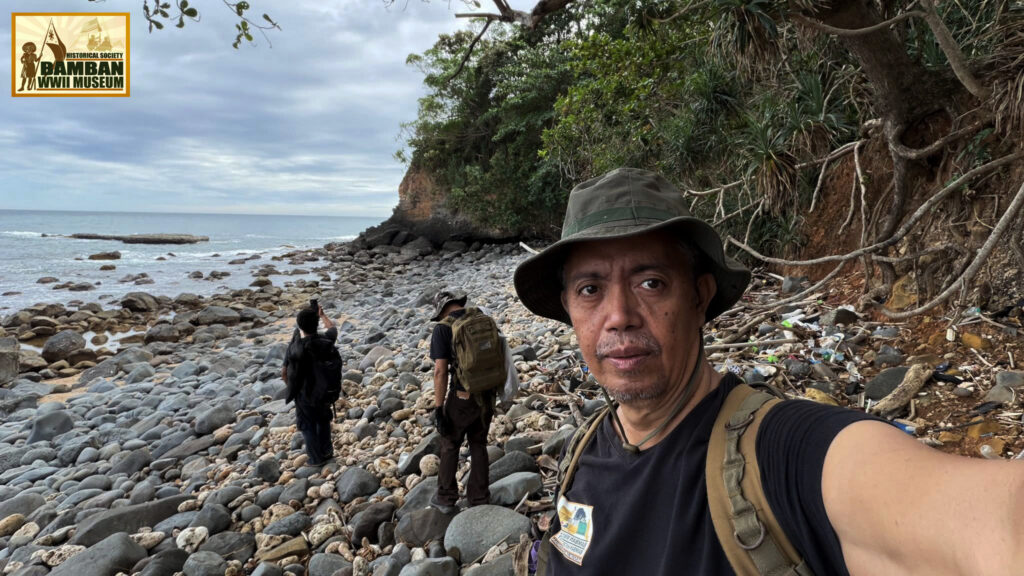
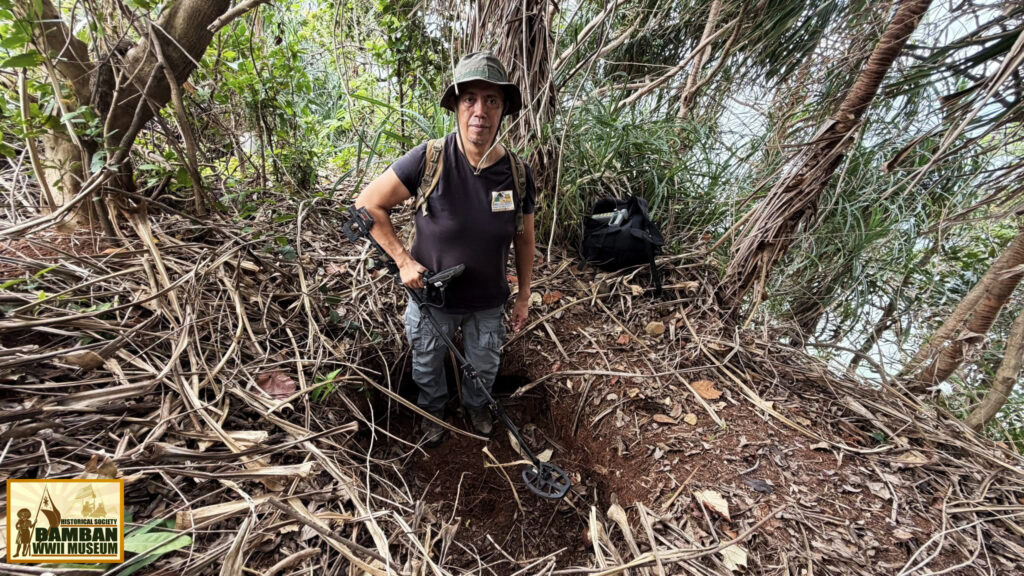
Now there we were, in the calm but cold breeze at the Quinauan, 84 years since the last Japanese died in battle, standing on the same battle grounds, picking the remains of war from the 1st and 2nd line and on the final stand where Col. Tsunehiro’s survivors holed inside the cave and blasted by the Filipino soldiers.
ARTIFACTS AND RELICS IN THE FORMER BATTLEFIELDS – かつての戦場の遺物と遺物
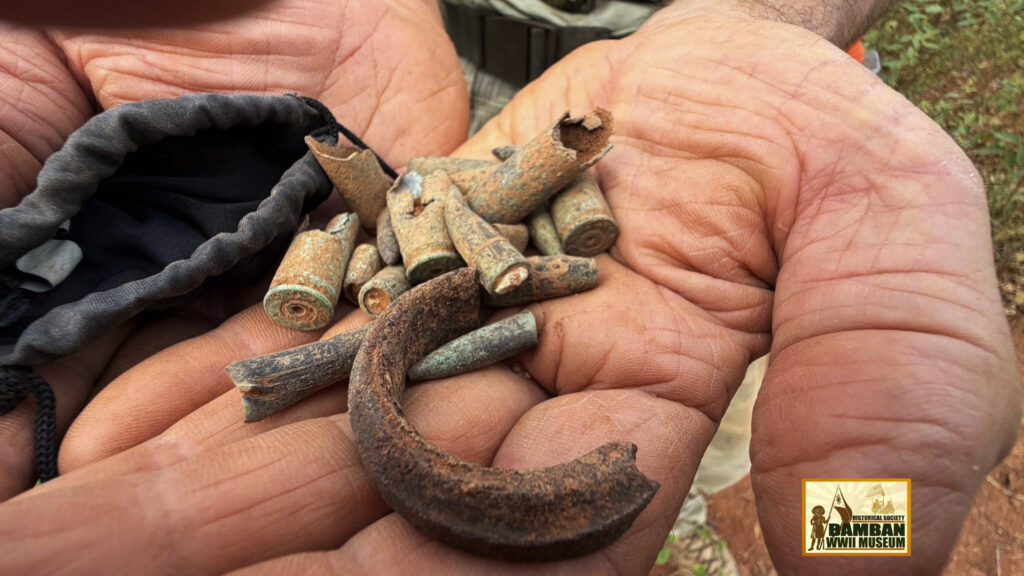
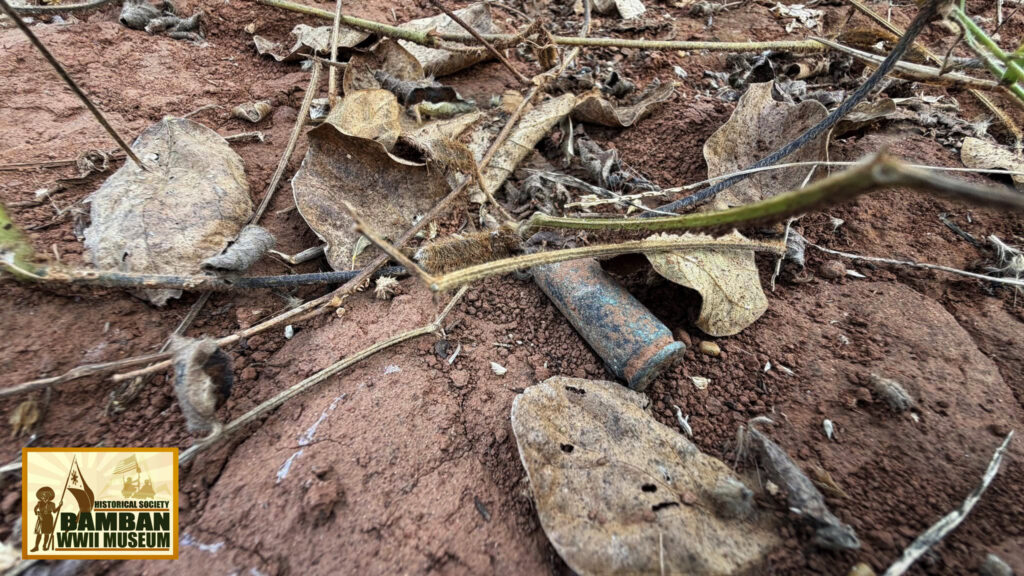
On top of the north point of the Quinauan, were found numerous casings of .50-cal MG near the foxhole manned by Filipino Scouts from B Company, 57th Infantry (P.S.), who gunned down survivors below the beach and on the caves.
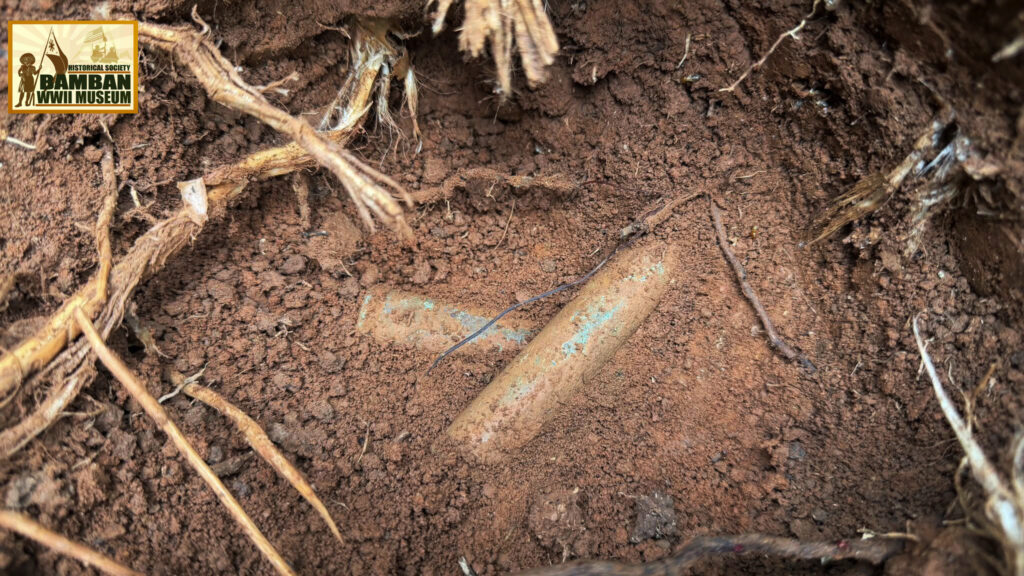
It was such a memorable experience of this battlefield archeology for a small battle ground with big casualties on both sides. From all the areas of the conflict, we scoured the former battlefields where we found traces and relics of war.
IN MEMORIAM – 追悼
In their memory and memorial, we gave our prayers for the repose of souls for the gallant soldiers who gave their ultimate sacrifice at the Quinauan.
CITATION:
(1) John W. Whitman, Bataan Our Last Ditch.
(2) Alexander Irvin, Surviving Bataan and Beyond.
© 2026 Rhonie C. Dela Cruz
Bamban WWII Museum/Historical Society
Bamban Center for Pacific War Studies
WWII Remembrance Network – Hell Ships Memorial
Tarlac Provincial Tourism Office
Bamban Tourism Office